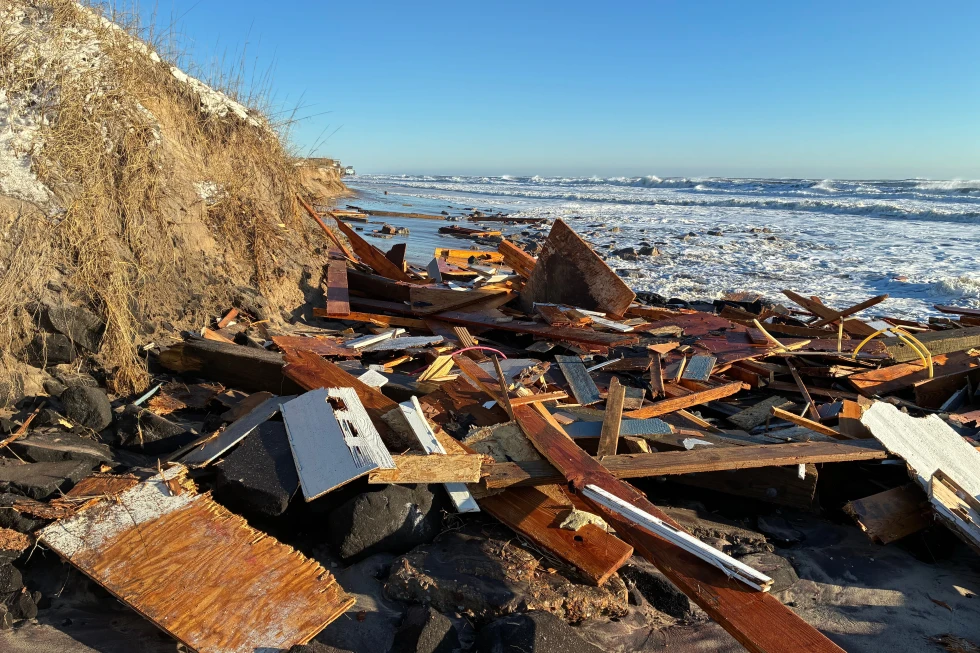
RALEIGH, N.C. — Four homes devastated by icy winds on North Carolina's eroding coastline have collapsed into the Atlantic Ocean, further highlighting the impact of severe winter weather across the eastern U.S. This week marks over a week of freezing temperatures that have gripped much of this region.
The affected areas have seen thermometers persistently below zero, with sub-freezing temperatures expected to return to parts of the Southeast. In the Carolinas and Virginia, residents are still clearing deep snow, while more than 70,000 homes and businesses in Tennessee and Mississippi face ongoing power outages after a previous snowstorm caused extensive damage to utility infrastructure.
For residents like Terry Miles in Nashville, experiencing days without electricity has forced him and his family to resort to makeshift living conditions, cooking outdoors on propane grills and insulating themselves with blankets. We're roughing it, he expressed. It's a dire situation compounded by critical service communication failures from the local utility, Nashville Electric Service, which is under scrutiny for its response to this unprecedented crisis.
In addition to the collapse of properties due to weather conditions, farmers in Florida are anxiously assessing damage as they face a rare cold spell. Growers, particularly those dealing with ferns, find their shipments jeopardized just ahead of Valentine's Day, their busiest time of the year.
Officials reported that the total number of fatalities associated with the extreme cold has surpassed 110 across affected states, raising alarm about hypothermia deaths, including several in New York City.
Winter Woes: House Collapses and Cold Weather Amounts
The National Park Service reported that the weekend's 'bomb cyclone' caused substantial damage, collapsing homes in North Carolina that were already vulnerable due to long-term erosion. Photos showcased piles of debris littering the shoreline, a stark reminder of how rising seas are swallowing the land.
Also in Florida, farmers had to resort to protective measures against the freezing temperatures, seeing frigid temperatures lead to unusual weather phenomena, including snow flurries in areas not accustomed to such events.
As the winter weather persists, officials across the eastern U.S. continue to face challenges not only in restoring utilities but also in supporting their communities through these extreme conditions. The National Weather Service is still issuing freeze warnings in areas like Georgia and Florida, and further snowfalls are predicted to hit parts of the Midwest.
Efforts are ramping up to address the considerable snow, ice, and power restoration demands as regions dig out from the aftermath of these winter storms.