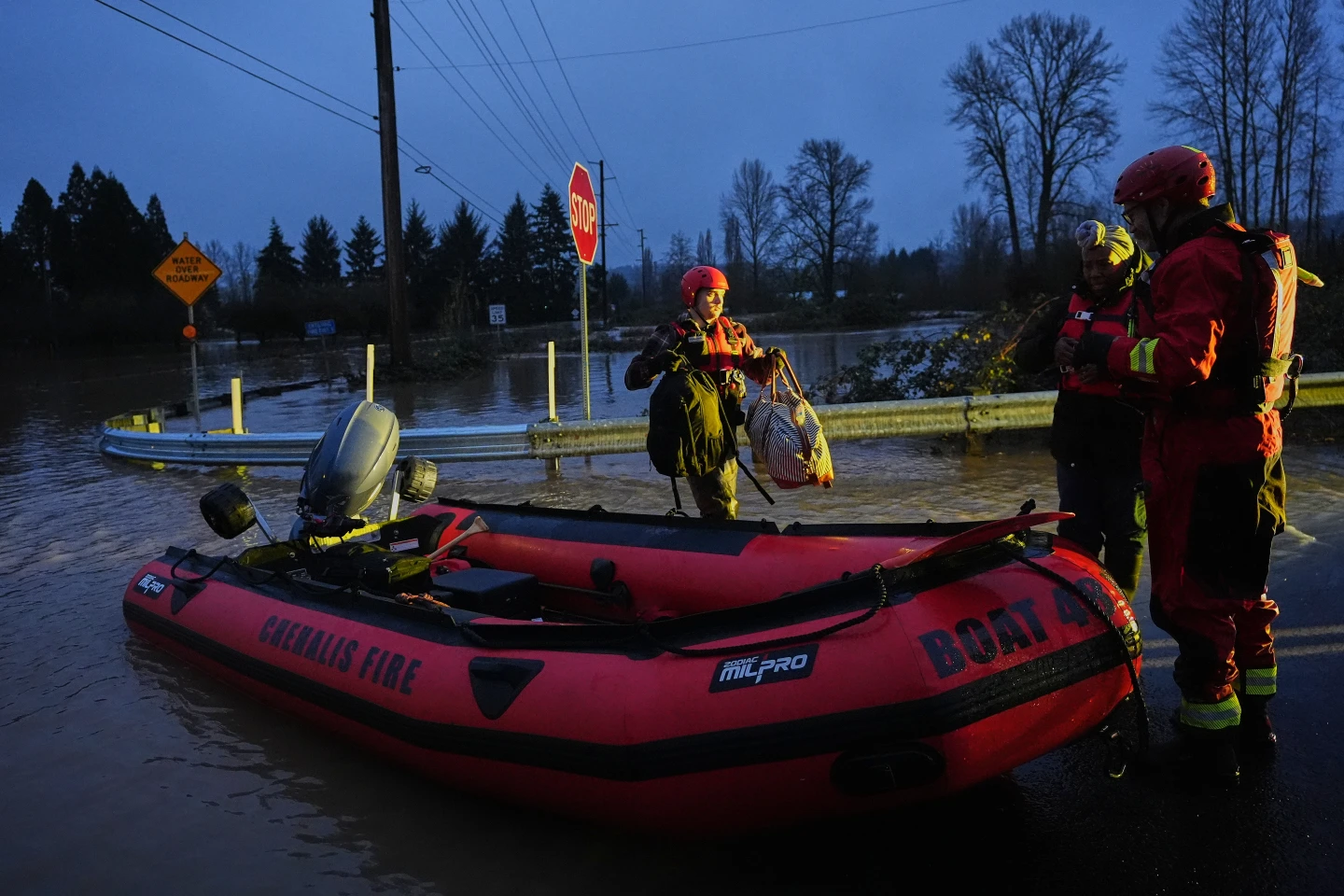
PORTLAND, Ore. — The Pacific Northwest faced another wave of powerful storms on Wednesday, following a heavy rainfall event that severely impacted the region the day before. The intense weather conditions have resulted in swollen rivers, road closures, and numerous emergency rescues.
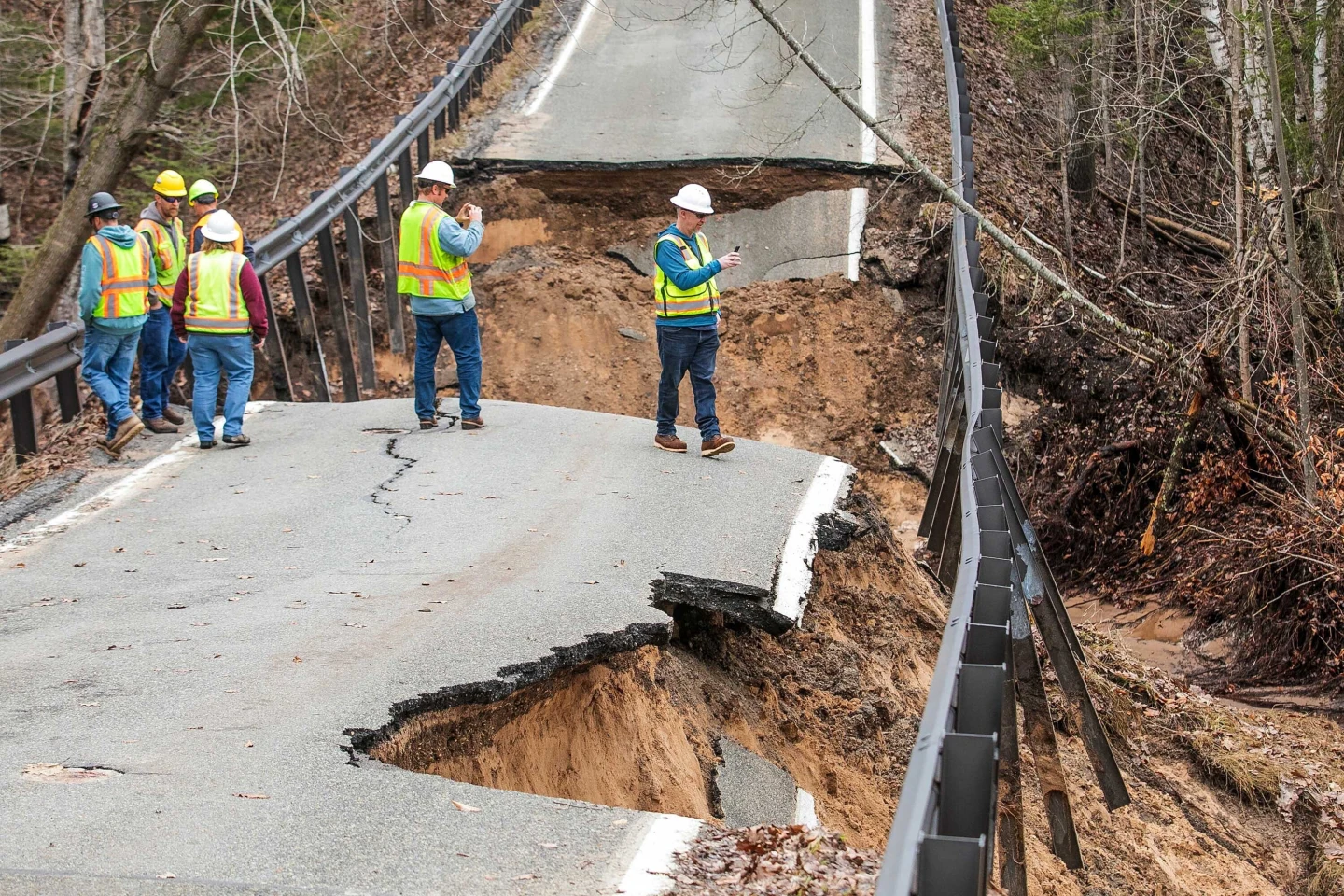
The initial storm caused significant disruptions, prompting school closures and widespread power outages across parts of Oregon and Washington. High waters led to debris slides that stranded vehicles, leading emergency crews to use inflatable kayaks to rescue people trapped by rising waters. In one incident northeast of Seattle, a rescue team was reported to have pulled a trapped individual a mile to safety.
Washington Gov. Bob Ferguson announced via the social platform X on Tuesday night that the state’s Emergency Operations Center was activated at its highest level in response to the storm conditions.
Forecasters have warned that the worst may still be ahead, with major rivers, including the Skagit River near Concrete, expected to exceed major flood levels later in the week. Predictions indicate that this river could rise over 15 feet above flood stage by Thursday, potentially setting a new record, according to the National Water Prediction Service.
As the National Weather Service described, an atmospheric river phenomenon—a jet stream of moisture from the Pacific Ocean—has contributed to the excessive rainfall observed along the Oregon and Washington coast. Residents have been advised to remain vigilant due to the potential for flash flooding and other related hazards.
Along major highways such as Interstate 5 between Seattle and Portland, five rescues have already occurred due to drivers attempting to navigate flooded roadways. Notably, a family of six was rescued from their home in Chehalis, which was found to be submerged under several feet of water.
Authorities across affected areas have been proactive in warning residents about imminent flooding dangers, with door-to-door notifications and precautions like temporary flood control measures being enacted in various communities.
Another storm system is projected to affect the region starting Sunday, creating an unpredictable weather pattern in the days leading up to the holiday season. Emergency services are preparing for more potential flooding and related crises as additional rain is expected. In contrast, southeastern Alaska is bracing for arctic cold with wind chills dipping as low as minus 50 degrees Fahrenheit.
Overall, the series of storms hitting the Pacific Northwest serves as a stark reminder of the challenges posed by extreme weather events related to climate change, raising concerns about long-term infrastructure resilience and emergency preparedness in vulnerable regions.