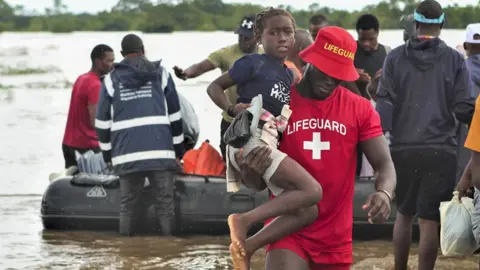
Tens of thousands of people in Mozambique are being rescued as rising waters continue to devastate the southern African nation - the worst flooding in a generation.
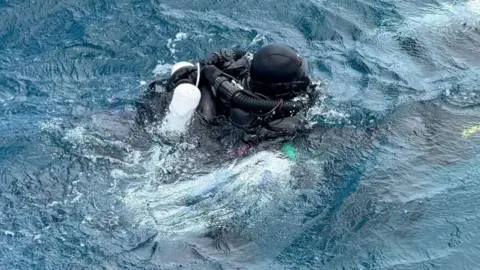
Teams from Brazil, South Africa and the UK have been helping with life-saving rescue operations.
For me, this is the first time I have experienced a calamity of this magnitude. Elders say a similar disaster took place in the 1990s, said 24-year-old mechanic Tomaz Antonio Mlau.
Mlau and his family, who live near Marracuene - a town 30 km (19 miles) north of the capital, Maputo - woke up to find their house inundated after the Inkomati River burst its banks.
When a rescue boat came a few hours afterwards, we did not hesitate to board it and come to safety in Marracuene town, he said, adding that they had to abandon all their belongings and only managed to bring a change of clothes.
Many gathered at Gwazamutini Secondary School are farmers from the low-lying areas with livestock and rice fields. Sixty-seven-year-old Francisco Fernando Chivindzi expressed the overwhelming loss, saying, We lost everything in the floodwaters, including houses, TV sets, fridges, clothing and livestock.
Chivindzi, who is not sure that the floodwaters will recede before schools resume, is determined to return home to restart life from scratch.
Mayor of Marracuene municipality, Shafee Sidat, reported more than 10,000 people affected in the area and additional concerns due to discharge from a dam in South Africa upstream. The outlook remains grim as authorities anticipate further downpours, complicating both rescue operations and the recovery process.
Rescue operations are underway, but there are reports of people still clinging to treetops, reluctant to leave their homes despite the rising waters. Residents are now dependent on temporary shelters while grappling with food shortages and the loss of their livelihoods.
As the nation battles the relentless floodwaters, the focus is on immediate rescue efforts, safety, and a longer-term strategy for recovery in a nation already vulnerable to the impacts of extreme weather events.