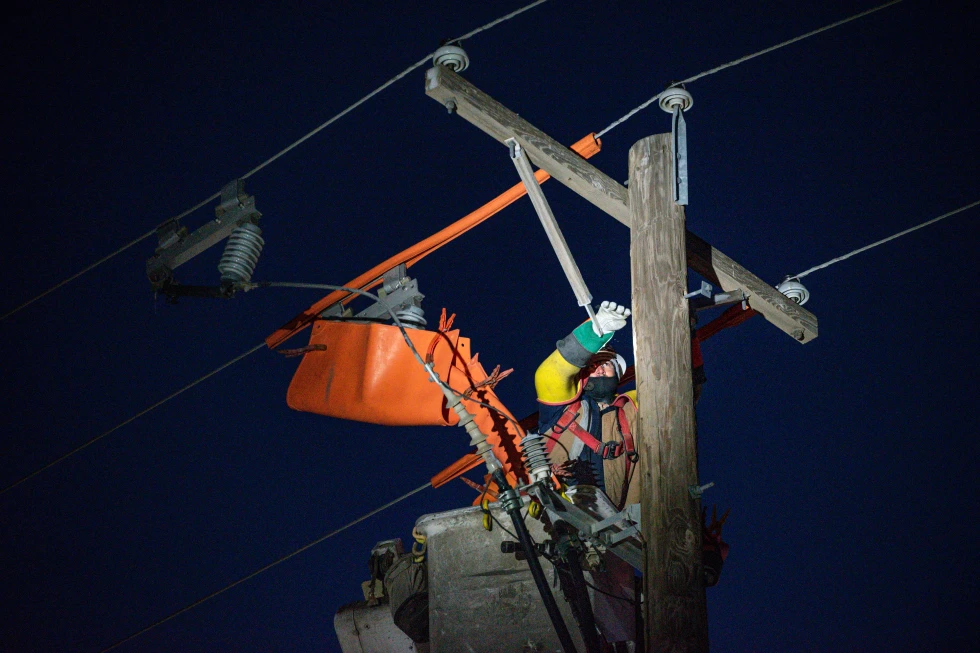
ATLANTA — The potential for power outages across the Southeast has officials making extensive preparations as an ice storm draws near. Newberry Electric Cooperative CEO Keith Avery kicks off his mornings by tracking weather updates and coordinating resources to quickly address outages.
Having faced significant challenges during previous storms, Avery’s concerns center around the lasting impacts of ice storms, which can inflict damage long after the precipitation has stopped.
I hate ice storms; they are worse than hurricanes, Avery said, citing how falling branches and ice-covered roads impede repair efforts.
In the southeastern U.S., many households rely on electric heating systems, making power loss particularly alarming as we head into the winter. The U.S. Census Bureau reveals that states such as South Carolina, Tennessee, and Texas are heavily reliant on electricity for heating.
As seen during Winter Storm Uri in Texas in 2021, inadequately prepared power infrastructure can lead to disastrous outcomes, reminding utility providers that resilience planning is paramount. The main lesson was to enforce requirements for utilities to be ready for cold weather, remarked Georg Rute, a power system expert.
In light of these historical lessons, states are reassessing their preparation methods. Utilities like Duke Energy and the Tennessee Valley Authority are ramping up efforts to ensure power lines are insulated against the storm's impact. Moreover, comprehensive strategies are being devised to minimize disconnection notices in the aftermath of significant weather events, especially in under-resourced communities disproportionately affected by outages.
As the weather forecast includes severe ice, utility companies remain vigilant, urging residents to prepare for potential outages and to take note of the enhanced power safety initiatives spurred by the harsh realities posed by winter storms.