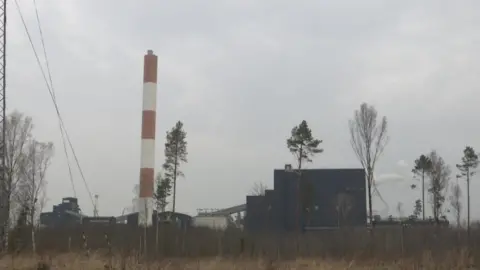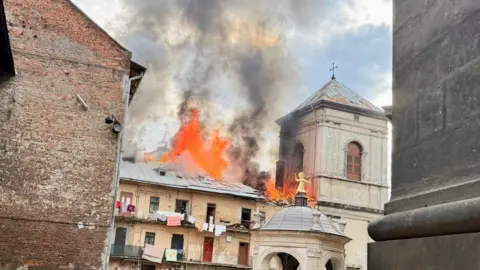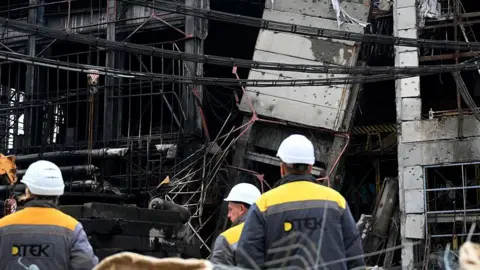
As Ukraine braces for another harsh winter, its largest private energy provider, DTEK, remains in a constant state of crisis due to relentless Russian bombardments targeting the electricity grid.
CEO Maxim Timchenko stated that the company struggles to maintain its operations, as attacks have led to widespread power cuts affecting 5.6 million Ukrainians. The intensity of strikes is so frequent that we just don't have time to recover, he remarked, illustrating the dire circumstances faced as temperatures drop.
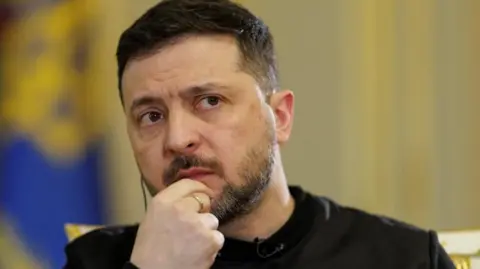
Ukrainian President Volodymyr Zelensky emphasized the cruel strategy employed by Russia, which aims to turn winter into a weapon against the population. Every night, parents hold their children in basements and shelters, praying our air defenses hold up, he explained to the Dutch Parliament.
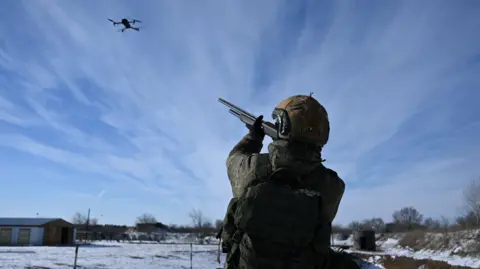
As the anniversary of Russia's invasion approaches, Timchenko reported a troubling pattern: the company frequently faces waves of drone, cruise, and ballistic missile attacks on its facilities. Residents of Odesa recently endured three days without power following a coordinated strike.
The struggle has united communities, with some individuals, like Yana, offering their homes to neighbors for charging devices and providing warmth and shelter to those without electricity.
Currently, around 50% of the nation’s energy comes from three major nuclear power plants damaged by the ongoing conflict. Meanwhile, DTEK, which operates five power stations, primarily relies on coal, with repairs costing them $166 million this year alone. Timchenko expressed determination, insisting, We will not give up. We have a responsibility to millions of mothers to provide power and heat.”
However, finding parts for repairs has become increasingly difficult, forcing DTEK to source equipment from across Europe. The ongoing conflict has rendered many local supply chains ineffective.
Timchenko’s statements underscore a humanitarian crisis as everyday life grows increasingly difficult for Ukrainians who have adapted to power cuts with backup generators and power banks. As one Kyiv resident noted, checking daily power schedules has become a part of routine life.
Every day, they risk their lives to maintain power in this area, Timchenko noted, mourning the loss of eight engineers amidst the conflict. The resilience of the Ukrainian populace continues to shine through amid these ongoing hardships, as they support each other in these trying times.