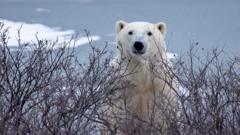
In the small town of Churchill, Canada, where polar bears roam the land, residents are learning to navigate the complex relationship between humanity and nature in a rapidly warming world. The community is known as the polar bear capital of the world, and each autumn, as the Hudson Bay thaws and then freezes, hundreds of polar bears congregate on the shore, anticipating the return of sea ice and their primary prey, seals.
However, in recent decades, warming temperatures have resulted in a concerning trend: the bay is ice-free for more extended periods, which has decreased the polar bear population by nearly half since the 1980s. Alysa McCall from Polar Bears International (PBI) explains, "Bears are now on land about a month longer than their grandparents were," making survival for both young and adult bears increasingly precarious.
In Churchill, children like Tee are well-versed in safety measures related to living near the largest land predator on earth. "If there's a bear this close to you, make a fist - and punch it in the nose," she suggests with a mix of confidence and bravado. It's a necessity in a town where "bear awareness" is paramount, and murals depicting polar bears remind residents of their powerful neighbors.
Yet, as the summers grow warmer and the seasonal dynamics change, concerns mount over how to safely coexist with these iconic animals. The long-standing presence of bears has led to the establishment of a polar bear alert team that patrols the area and uses innovative technologies, such as the experimental radar-based system known as 'bear-dar,' attempting to protect both the community and the bears.
Despite the risk of human-animal encounters, Churchill’s mayor, Mike Spence, is optimistic about the town's adaptability and potential for growth. He believes that understanding the impact of climate change will allow Churchill to flourish, even as the polar bears face an uncertain future.
As students gaze out over Hudson Bay, they reflect on the fragility of their environment, with children like Charlie acknowledging, "If climate change continues, the polar bears might just stop coming here." The polar bears, while integral to Churchill's identity and tourism, bring with them a pressing paradox in a town where the balance of survival hangs by a delicate thread.
The future of both the humans and polar bears of Churchill will depend on how successfully they can navigate the evolving landscape of a warming world together.