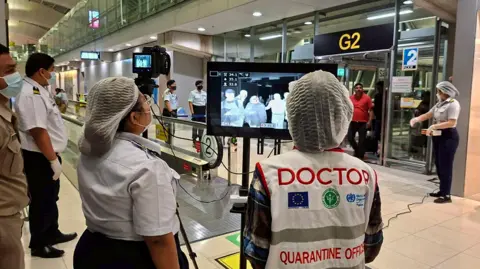
An outbreak of the deadly Nipah virus in India's West Bengal state has sparked concern in parts of Asia, with some tightening screening measures at airports.
Thailand has started screening passengers at three airports that receive flights from West Bengal. Nepal has also begun screening arrivals at Kathmandu airport and other land border points with India.
Five healthcare workers in West Bengal were infected by the virus early this month, one of whom is in critical condition. Some 110 people who were in contact with them have been quarantined.
The virus can spread from animals to humans and has a high death range – ranging from 40% to 75% – as there is no vaccine or medicine to treat it.
What is the Nipah virus and what are its symptoms?
The Nipah virus can be transmitted from animals, like pigs and fruit bats, to humans. It can also spread person-to-person through contaminated food.
The World Health Organization has described Nipah in its top ten priority diseases because of its potential to trigger an epidemic.
The incubation period ranges from four to 14 days, with initial symptoms including fever, headaches, muscle pain, vomiting, and sore throat, which can progress to severe neurological complications.
To date, no drugs or vaccines have been approved to treat Nipah virus disease.
Where were the past outbreaks?
The first recognized Nipah outbreak was in 1998 among pig farmers in Malaysia. Bangladesh has since seen over 100 deaths from Nipah since 2001.
Recent outbreaks in India were reported in 2001, 2007, and more recently in Kerala in 2018.
What is happening now?
As of last week, five confirmed cases were reported, all linked to a private hospital in Barasat. Only India has reported cases, but other nations are stepping up precautions.
Thailand has implemented health screenings and requires declarations for arriving travelers, while Nepal has also stepped up border health protocols.
In Taiwan, health authorities are considering classifying Nipah virus as a significant public health risk, facilitating immediate reporting and control measures.
Additional reporting by BBC Thai