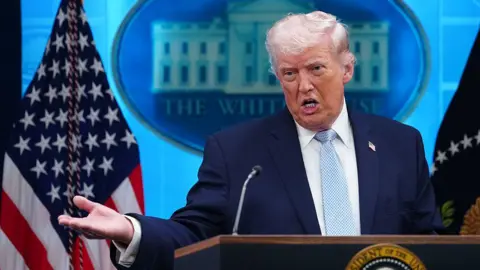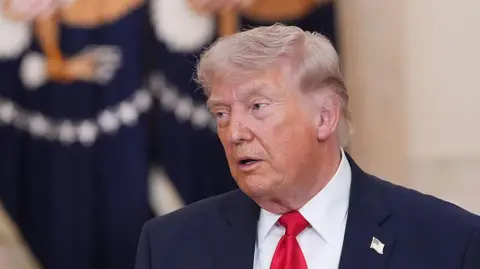
Donald Trump has made clear he covets Greenland.
Now he claims to have secured the framework of a future deal, including rights to rare earth minerals essential for electronics and military technologies.
Greenland is believed to sit on substantial reserves of oil and natural gas, along with vital minerals like graphite, niobium, and titanium, as identified in the 2023 Geological Survey of Denmark and Greenland. Notably, 25 of the 34 minerals classified as critical raw materials by the European Commission are found on the island.
Senator Ted Cruz highlighted that Greenland's strategic significance extends beyond defense, emphasizing the vast reserves of rare earth elements which are increasingly crucial for energy and technological advancement.
Despite some of Trump's claims regarding security motivations, analysts argue that the primary interest remains centered on accessing Greenland's resources to counterbalance China's dominance in the rare earths market. The U.S. has already begun re-establishing ties with Greenland, reopening its consulate and fostering relationships to facilitate potential mining projects.
However, the feasibility of accessing these resources remains in question, with challenges like extreme weather conditions, high costs, and underdeveloped infrastructure hindering progress. Experts point out that much of Greenland's mineral wealth remains untapped and challenging to exploit.
Yet, the rapidly melting ice caused by climate change is revealing previously inaccessible lands, potentially simplifying future extraction attempts and enhancing the strategic value of Greenland during this era of climate change.
This complex interplay of resource availability, geopolitical strategy, and environmental factors illustrates why Greenland is drawing increasing attention from global powers.