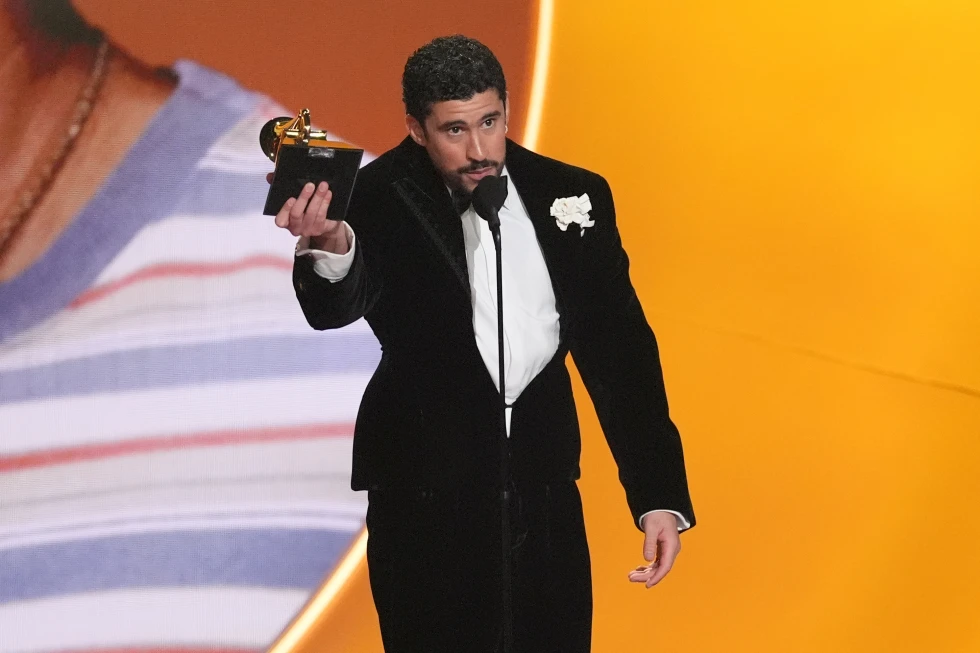
LOS ANGELES (AP) — The 2026 Grammy Awards made headlines for its cultural significance, highlighted by Bad Bunny winning Album of the Year for 'Debí Tirar Más Fotos.' This recognition points to a broader change within the Recording Academy as more diversity is prioritized.
Throughout the awards night, many winners voiced strong anti-Immigration and Customs Enforcement (ICE) sentiments, highlighting the increasing awareness and advocacy surrounding immigrant rights in the United States.
An Evolving Grammy Awards
In previous years, the Grammys have faced criticism over a lack of diversity, often overlooking artists of color in favor of more mainstream nominees. However, recent changes within the Recording Academy, including a surge in new voters from diverse backgrounds, indicate a shift towards representation.
In 2026, the industry celebrated its commitment to inclusivity, evident in multiple acceptance speeches addressing immigration and the importance of cultural identity.
Bad Bunny’s Historic Win
Bad Bunny's win not only marks a milestone for Latin music but also represents a significant cultural moment. 'Debí Tirar Más Fotos' blends traditional Puerto Rican music with contemporary styles, showcasing the richness of Latin culture at a time when it faces scrutiny and undervaluation.
As Bad Bunny prepares to perform at the Super Bowl halftime show, his influence as a prominent voice for Latino culture is undeniable, and his Grammy victory reflects a growing acceptance of diverse musical narratives.
A Platform for Advocacy
Anti-ICE sentiments echoed across the event, with artists like Billie Eilish and Olivia Dean using their platforms to advocate for immigrant rights. Dean proudly stated her heritage as a granddaughter of an immigrant, reinforcing the narrative that immigrants contribute significantly to the fabric of American society.
Bad Bunny himself notably rejected derogatory terms associated with immigrants, underlining the ongoing struggles faced by Latino communities in the U.S.
A Broader Implication
The messages delivered at this year’s Grammys were amplified by the pressing discussions surrounding immigration in the country. Artists expressed anxiety about the current climate but also hope and resilience through their music, signaling a desire for change and solidarity.
“It is a little bit of light,” remarks scholar Vanessa Díaz, emphasizing the importance of cultural recognition amidst targeted attacks on language and identity. The outcome of the Grammy Awards in 2026 thus stands as a testament to the evolving landscape of music and the powerful narratives it carries.