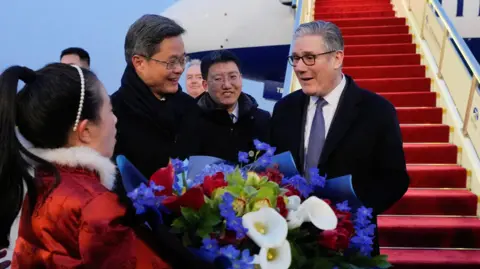
Prime Minister Sir Keir Starmer has arrived in China for a three-day visit - the first by a British prime minister in eight years.
Sir Keir is seeking to strengthen trading and cultural ties between the two nations after years of acrimony.
However, he has faced criticism from opponents at home over the risks posed by China to the UK's national security and Xi Jinping's human rights record.
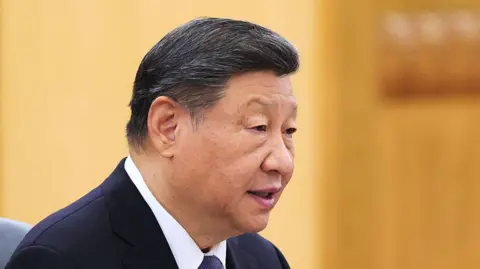
The PM, who will meet President Xi on Thursday, stated that the trip will provide benefits to the UK and emphasized the need for a strategic and consistent relationship with the world's second-largest economy.
Upon arriving at the airport in Beijing, Sir Keir was warmly welcomed by a delegation of Chinese government officials and presented with a bouquet of flowers. Union flags were prominently displayed in Beijing's Tiananmen Square.
Addressing the 60 British business leaders accompanying him, he remarked, 'You’re making history. You’re part of the change that we’re bringing about.' He affirmed the UK government's commitment to being outward-looking, focused on building relationships while maintaining national interests.
The complexities of engaging with China are highlighted by the ongoing accusations of human rights violations in Xinjiang and concerns regarding China's espionage activities in the UK, as raised recently by MI5.
Starmer has carefully avoided specific details on the topics he plans to address with Chinese leaders, preferring to keep diplomatic discussions open and flexible. He stated, 'Engaging with China is about discussing our disagreements and progressing areas of agreement.'
In light of a controversial plan for a mega-embassy in London, Starmer's trip has drawn sharp criticisms from fellow politicians, reflecting the divided opinions regarding the UK's approach to China.
Sir Keir emphasized that the UK would not be forced to choose between China and the US, advocating for continued close ties with both nations in business and security matters, balancing the UK’s interests with pragmatic engagement with China.