Across the United States, the depiction of the nativity scene is traditionally a tender image of peace and hope. However, in the face of stringent immigration policies, some churches are using this sacred iconography to express their concerns over the treatment of immigrants and refugees.
In Evanston, Illinois, a nativity scene at Lake Street Church depicts Jesus as a child under duress, wrapped in a silver emergency blanket with his wrists zip-tied, and accompanied by a Mary wearing a gas mask. Nearby, the church sign states: Due to ICE activity in our community the Holy Family is in hiding. Similarly, in Dedham, Massachusetts, another church’s nativity scene has been altered to reflect this urgent social issue, replacing baby Jesus with the stark message: ICE was here.
These artistic interpretations ignite passionate responses in communities, highlighting a poignant struggle between faith-based activism and traditional religious expressions. Proponents argue that the nativity's message resonates deeply with the empathy required for those facing deportation and family separation. They emphasize the importance of using religious symbols to challenge political iniquities.
On the other hand, critics condemn these displays as sacrilegious and politically divisive. Church leaders within more conservative segments of the Catholic Church have expressed outrage, with some calling for the removal of these politically charged installations, stating they divert from the church’s core spiritual mission. An archdiocesan spokesperson remarked that parishioners expect genuine opportunities for prayer and worship, devoid of divisive political themes.
Rev. Michael Woolf of the Lake Street Church countered, saying, Christmas is a time when we have public art out on the lawn and we get an opportunity to say something.” Past displays in sibling congregations have included depictions of Jesus amidst rubble in Gaza, reflecting various peace crises around the world.
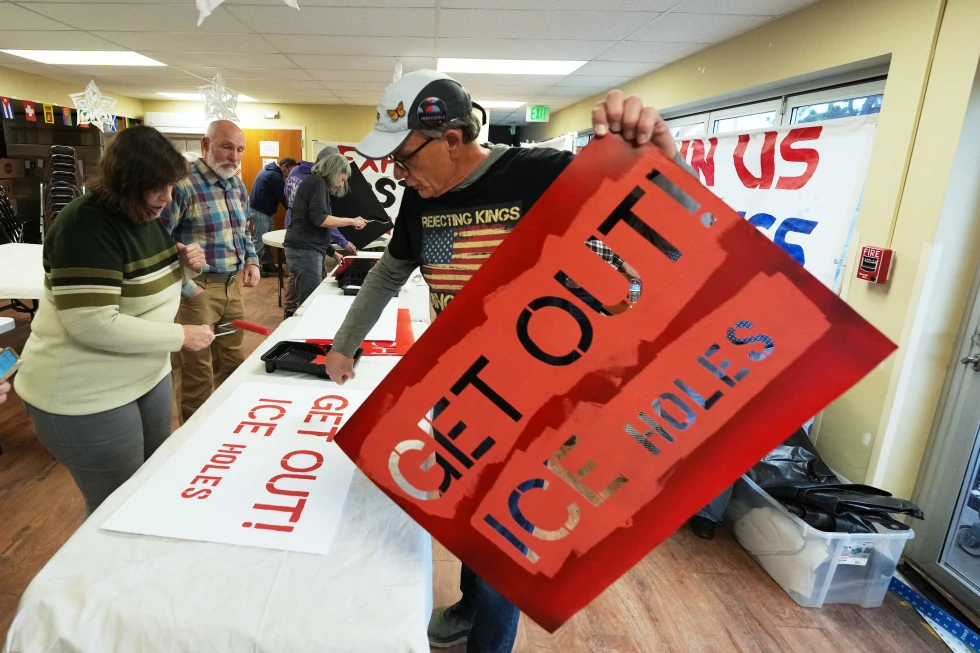
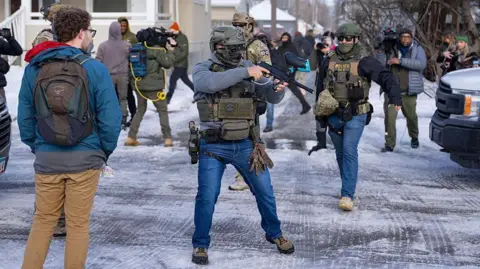
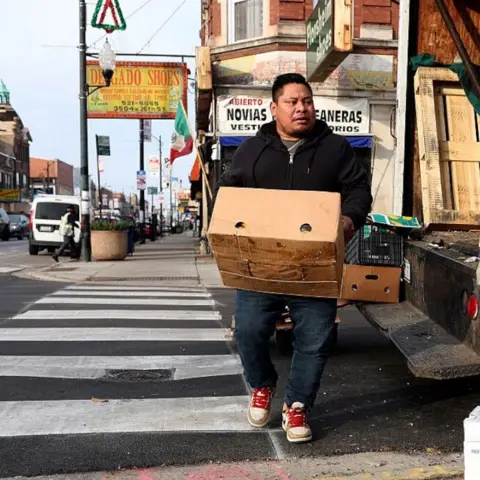
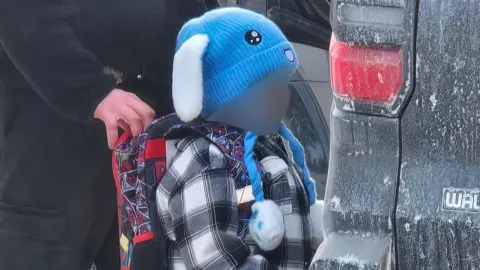
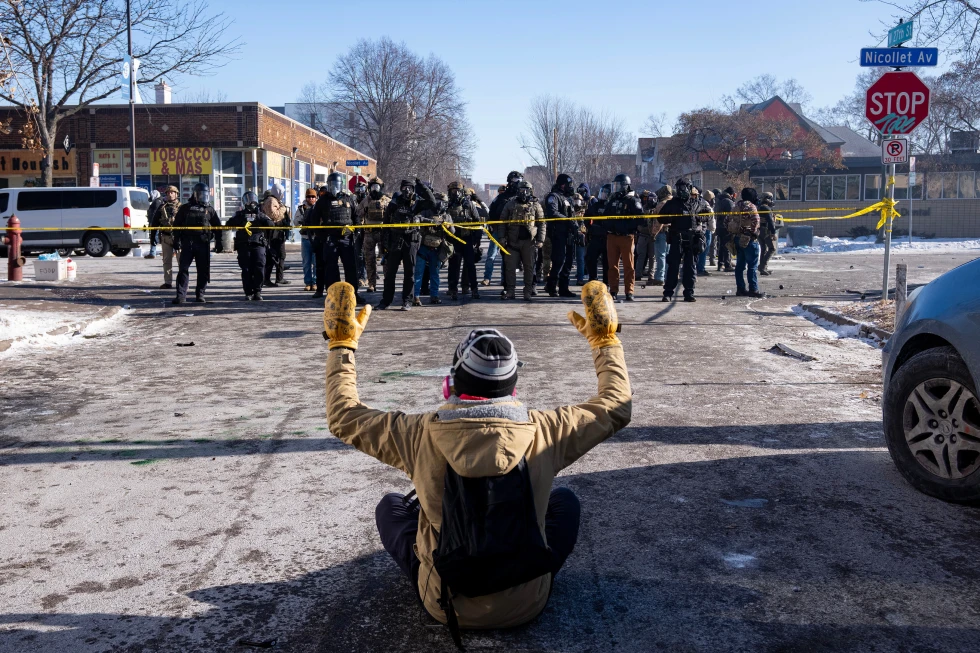
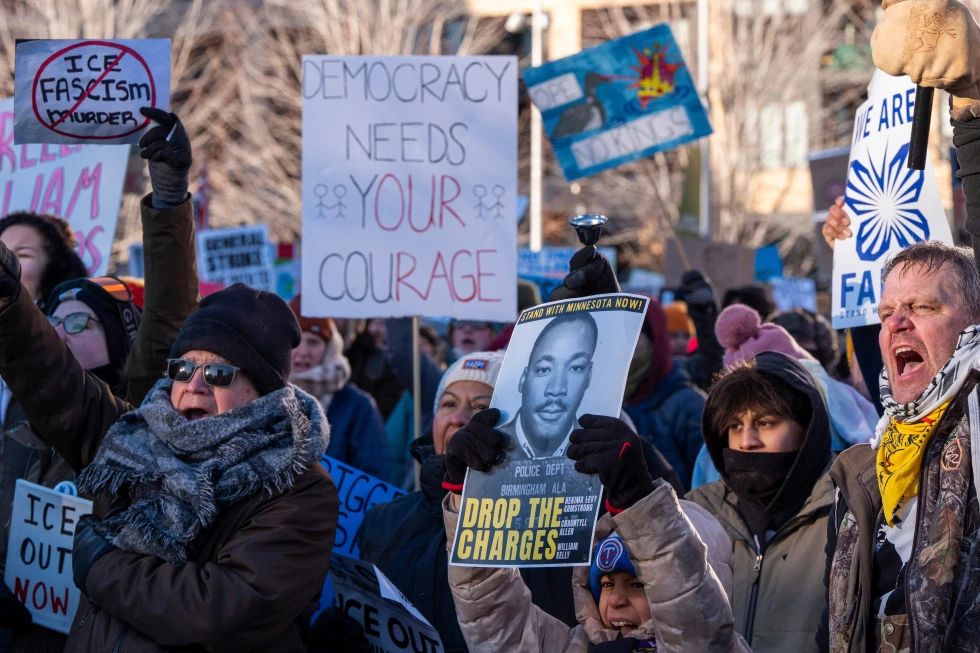
The ongoing immigration crackdown in the U.S. has compounded fears in affected communities—families torn apart, children left traumatized by the aggressive enforcement tactics of federal agents. Activists like Phil Mandeville, who coordinates refugee support efforts, argue that their religious practices are not stunts but meaningful actions rooted in compelling experiences of helping those in need.
As tensions rise, fellow church members and concerned citizens have taken to rallying support for and against these nativity scenes. Volunteers from local synagogues have offered security for services amidst threats of protest, indicating the communal tensions fueled by these displays. The stark contrast between opposing views encapsulates the polarized dialogue surrounding faith, immigration, and social justice.