In brief
While UK Prime Minister Sir Keir Starmer reiterated the government's firm position against reparations during a Commonwealth summit, the collective call from 56 member nations for a detailed dialogue signals a significant shift in discussions surrounding historical injustices and reparatory justice.
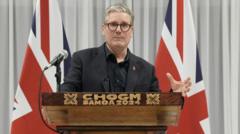
Commonwealth leaders convened in Samoa for a two-day summit where they unanimously agreed that the "time has come" to address the topic of reparations for the slave trade. This comes despite the UK’s efforts to keep the issue off the agenda. In a signed document by all 56 heads of government, including UK Prime Minister Sir Keir Starmer, there was a recognition of the ongoing calls for "discussions on reparatory justice" pertaining to the "abhorrent" transatlantic slave trade. The leaders advocated for a "meaningful, truthful, and respectful conversation" on this pressing issue.Starmer clarified that discussions did not revolve around financial reparations, emphasizing the UK's firm stance against any monetary compensation. "Our position is very, very clear in relation to that," he stated, as pressures mount from Commonwealth nations seeking an apology and reparations for Britain's historical involvement in slavery. There are various forms reparations might take—from financial payments to symbolic gestures. Ahead of the summit, UK officials had insisted that reparations would not be a topic of discussion.During a press conference following the summit, Starmer described the meetings as "positive," further downplaying the reparations dialogue, framing it as merely one part of a broader conversation primarily focused on resilience and climate issues. According to him, the reparations mention was just one paragraph in a lengthy statement.Prior to the summit’s conclusion, leaders engaged in a six-hour conclave without advisers. The UK continues to maintain its position, which some Commonwealth nations found frustrating, especially those advocating for reparations. While the UK refrains from any monetary commitments, Starmer did indicate an openness to revisit the topic at the upcoming UK-Caribbean forum, set for March in London. Bahamian Foreign Minister Frederick Mitchell expressed hope that a more comprehensive analysis would emerge from that dialogue.Looking ahead, diplomats predict that reparatory justice will be a focal point at future Commonwealth summits. A UN judge previously estimated the UK's reparations could surpass £18 trillion across 14 Caribbean nations. The reparations discourse may include formal apologies, educational initiatives, public health support, or other forms of compensation.Shirley Ayorkor Botchwey, Ghana's foreign minister and the newly appointed Commonwealth Secretary-General, has voiced support for reparations while emphasizing the work required to move forward. Her appointment signals a potential shift within the Commonwealth's approach to its colonial legacy and the discussions surrounding reparations for slavery.