In brief
In a historic declaration, Saudi Crown Prince Mohammed bin Salman has condemned Israel's military operations in Gaza as "genocide", urging for an immediate withdrawal from Palestinian territories amid failed international intervention and increasing humanitarian crises.
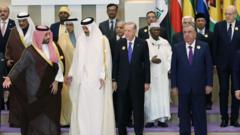
Saudi Arabia's Crown Prince Mohammed bin Salman has made waves in the diplomatic arena by labeling Israel's military actions in Gaza as "genocide" during a recent summit with Muslim and Arab leaders. This marked some of the strongest public denunciation of Israel from a Saudi official since the conflict escalated. The prince's comments come amidst continued violence, with his critique extending to Israeli airstrikes on Palestinian neighbors including Lebanon and threats towards Iran.Israel, however, staunchly denies the accusations of genocide, standing firm on its military campaign to eradicate Hamas, which began following the group’s deadly incursion into Israel on October 7, 2023. The violent retaliation has resulted in over 43,400 casualties in Gaza, according to the Hamas-run health ministry, raising significant concerns over civilian casualties and humanitarian conditions in the territory.In a collaborative response at the summit, Saudi Arabia's Foreign Minister Prince Faisal Bin Farhan Al-Saud chastised the international community for its inaction, asserting that the suffering of Gazans, including widespread starvation, is a direct consequence of Israeli aggression. He remarked, "Where the international community primarily has failed is ending the immediate conflict and putting an end to Israel’s aggression."The summit also featured calls for a complete Israeli withdrawal from the West Bank and Gaza—a sentiment echoed by many regional leaders present—reflecting a growing urgency to address the ongoing crisis. Additionally, the gathering underscored the horrors faced by Gaza's populace, particularly women and children, who according to a UN report, make up nearly 70% of documented victims over a six-month period.As geopolitical tensions escalate, particularly in light of Israel's recent legislative moves to limit the activities of UN agencies in the region, leaders are looking for diplomatic breakthroughs. Former President Donald Trump's potential return to the White House adds another layer of complexity, stirring both hope and anxiety among Gulf leaders who recognize his historical ties to Israel and his capacity for negotiation.Across the region, discussions are heating up, and the implications of these shifts could redefine alliances and intervention strategies intended to salvage peace in an increasingly volatile Middle East.