In brief
In Ghana's Agbogbloshie dumpsite, workers face hazardous conditions as they burn electronic waste to extract valuable metals. This illegal e-waste trade, driven by developed nations, not only endangers workers' health but also exacerbates environmental crises globally.
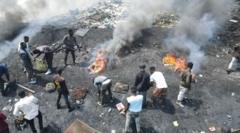
At the Agbogbloshie dumpsite in Accra, Ghana, a troubling scene unfolds daily. Towering hills of e-waste—discarded TVs, computers, and cables—are set ablaze as men sift through the wreckage, hoping to salvage precious metals like copper and gold. The act of burning, often done under toxic fumes, paints a stark picture of survival amid environmental devastation.Abdulla Yakubu, a young worker at the site, struggles as the acrid smoke affects his health. "I don’t feel well," he states, noting the severity of inhaling polluted air day in and day out. Nearby, Abiba Alhassan, a mother sorting through used plastic bottles, shares his plight: "Sometimes, it’s very difficult to breathe... I feel very unwell." According to a UN report, e-waste emerged as the fastest-growing waste stream, with 62 million tonnes generated in 2022—an 82% increase since 2010. This surge is largely driven by the global demand for electronics, including smartphones and computers. Despite its rapid generation, only about 15% of e-waste is recycled properly, leading to a dangerous cycle where wealthier nations offload their refuse to poorer countries.The plastic parts within e-waste emit harmful toxins when burned, significantly harming both human and environmental health. Agencies worldwide, such as the World Customs Organisation, have reported a striking increase in the trafficking of e-waste from developed countries, now making it the most frequently seized waste item globally.Investigators have documented tactics used by traffickers to conceal e-waste, including declaring it as reusable goods or grinding it up to blend with other legal exports. In the UK, officials noted that much of the waste destined for countries like Ghana often ends up burned for precious metal extraction rather than being recycled responsibly.As countries in Southeast Asia tighten regulations against waste trafficking, an influx of e-waste is now finding its way to Africa, where there are fewer restrictions. A recent case in Malaysia involved the seizure of 106 containers of hazardous e-waste. The trafficking problem is exacerbated by criminals who employ sophisticated methods to evade authorities, sometimes even dumping waste into oceans as a part of their operations.The World Health Organisation warns that exposure to hazardous components in e-waste has dire health implications, particularly for vulnerable groups like women and children, who often work informally in recycling without proper training or safety equipment.Amid all the urgent discussions and impending regulatory changes, such as the Basel Convention’s mandates set to take effect in 2025, individuals like Abiba continue to suffer. She spends nearly half her earnings on medication for health issues caused by toxic exposure, yet feels compelled to remain in this hazardous job, as it is her family's sole source of income. The need for global solutions to manage e-waste responsibly becomes increasingly clear, as communities in places like Agbogbloshie continue to struggle under the weight of this toxic trade.