In brief
A recent investigation into a devastating helicopter collision at an Australian theme park has uncovered serious safety lapses, contributing to the loss of four lives.
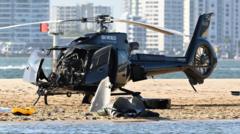
In January 2023, two helicopters collided near Sea World on the Gold Coast, resulting in four fatalities, including two British tourists, and multiple injuries. The Australian Transport and Safety Bureau (ATSB) found that a faulty radio antenna played a significant role in the incident. The report indicates that one pilot failed to hear a crucial radio communication moments before the crash, and ongoing operational changes at Sea World compromised established safety protocols.The tragedy unfolded when one helicopter was taking off while the other was landing. The fatalities occurred in the aircraft that was taking off, while the other helicopter managed to perform an emergency landing. Those injured suffered a range of serious to minor injuries.The ATSB investigation highlighted that Sea World had made operational changes aimed at improving customer offerings, such as introducing a second helipad and larger helicopters. However, these modifications inadvertently weakened the traffic separation protocols, culminating in a hazardous scenario for the helicopters. In the moments leading up to the collision, the helicopter taking off had a malfunctioning antenna, which likely prevented the pilot from receiving a vital radio communication from the landing aircraft. As the takeoff progressed, a ground crew member assured the departing pilot that airspace was clear, but this information had already become outdated. The pilot preparing to land saw the departing helicopter but did not perceive it as a threat; he expected to receive a "taxiing" call that would alert him to any changes in the situation. However, the faulty antenna prevented that communication, impairing the pilot’s ability to assess the risk of collision accurately.Among the victims were Diane Hughes, 57, and her husband Ron, 65, who were on holiday from Cheshire, and Vanessa Tadros, 36, a Sydney resident. Sea World Helicopters pilot Ashley Jenkinson, 40, originally from Birmingham, also perished in the crash. Witnesses from the returning flight praised the skills of the pilot who managed a safe emergency landing.The ATSB's report comprised 28 findings emphasizing essential lessons for aviation operators. The chief commissioner, Angus Mitchell, underscored the importance of careful management of operational changes in aviation to avoid unintended safety risks, stating, "Making changes, even those that seem to enhance safety, can have unintended consequences." The ATSB's investigation serves as a grim reminder of the need for vigilance and adherence to safety protocols in the aviation industry.