In brief
As Earth grapples with the increasing demand for data storage and processing, companies like Lonestar Data Holdings envision extending data centres to the Moon. This move responds to growing concerns over environmental impacts and seeks to leverage unlimited solar energy while ensuring enhanced security for sensitive data. However, challenges such as launch costs and technical infrastructure remain significant hurdles.
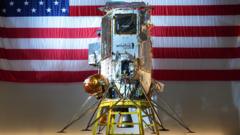
The possibility of establishing data centres on the Moon may sound like science fiction, but the concept is gaining serious traction, spearheaded by companies like Lonestar Data Holdings. President Stephen Eisele believes that lunar data centres could provide unmatched security and reliability for customers reliant on data processing.Last month, Lonestar proudly announced that it successfully tested a miniature data centre, about the size of a hardback book, aboard the Athena Lunar Lander developed by Intuitive Machines, a U.S. space exploration company. Launched by SpaceX, this test reflects the potential for off-Earth solutions in our rapidly expanding digital landscape.The escalating demands of artificial intelligence (AI) and data usage worldwide have created an insatiable need for data centres, projected to grow by 19% to 22% per year until 2030, according to McKinsey. However, the logistics of establishing ground-based facilities are becoming increasingly convoluted, with local communities often resisting new developments due to the environmental footprint associated with these sprawling tech hubs.Placing data centres in orbit or on the Moon presents a solution that minimizes local environmental impacts, providing access to boundless solar energy and eliminating proximity concerns. These space-based facilities could even meet the requirements of interplanetary missions, enabling seamless space-to-space data transfers.A feasibility study conducted by Thales Alenia Space, supported by the European Commission, further solidifies this vision. The report highlighted that orbital data centres could revolutionize the digital landscape in Europe while being environmentally friendly. Thales Alenia envisions a constellation of 13 satellites that could potentially mirror the processing capabilities of an average terrestrial data centre.However, experts point out significant obstacles before space data centres can be realized. Dr. Domenico Vicinanza from Anglia Ruskin University emphasizes the high costs associated with launching technology into orbit and the additional infrastructure necessary to maintain operations. Cooling systems, electronic protection from space weather, and dealing with the increasing amount of space debris present considerable challenges.On the other hand, Lonestar remains optimistic, citing increasing demand from clients such as the government of Florida and the Isle of Man's administration for their lunar data centres. In alignment with growing regulatory concerns surrounding data sovereignty, establishing data facilities on the Moon could facilitate compliance with jurisdictional requirements, underlining the notion that space law could govern these lunar infrastructures.With a proposed lunar data centre launch aimed for 2027, the company is not alone in this venture. Firms like Starcloud are fast-tracking their efforts to create satellite-based data centres, anticipating commercial operations by mid-2026.Ultimately, as industry stakeholders pursue these imaginative developments in the cosmos, the quest to build environmentally responsible, secure, and efficient data centres could soon transition from dreams to reality in our new digital frontier.