In brief
In Istanbul, comedian Deniz Göktaş was found guilty of insulting President Recep Tayyip Erdoğan after he mocked the leader as a “shy dictator.” The court awarded nearly 19 months in prison but released Göktaş because his time served already exceeded the sentence while imposing a travel ban. The ruling comes amid a series of arrests that critics say target dissent. Göktaş, who attracted over 15 million YouTube views, maintained that his remarks were political commentary, not criminal. Supporters celebrated the verdict, noting that the comedian can now reunite with family and return to the stage, although other journalists and activists face continued detention.
In Istanbul a court found comedian Deniz Göktaş guilty of insulting President Recep Tayyip Erdoğan after he mocked the leader as a “shy dictator.”
The judge awarded a sentence of 1 year and 8 months, but released the 36‑year‑old because his time served already exceeded the court’s order. He will, however, be subject to a travel ban that bars him from leaving Turkey.
Göktaş has spent 88 days in a solitary cell and has appealed to the court of appeals. He insists his comments were merely political commentary and denies criminal intent.
The comedian’s routine, which has earned more than 15 million views on YouTube, singled out a line in which he described the president as a "shy dictator." Authorities fear that the joke carries an insult, seeing it as a challenge to state authority.
In his court appearance the comic did not lose his sense of humor. He told the panel that he has quit smoking during his time in confinement and that he is looking forward to adding more laughter to his life post‑release.
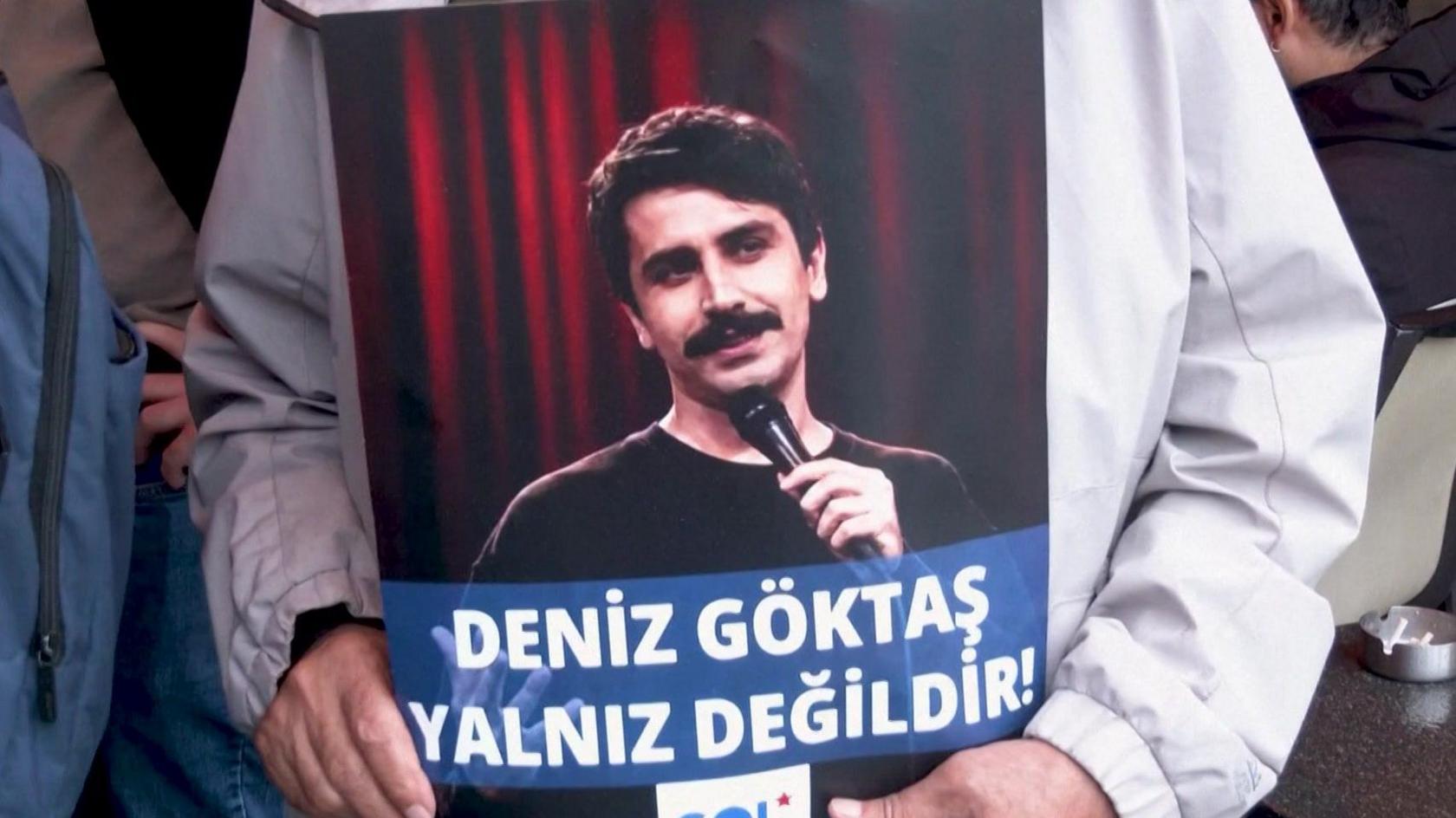
Supporters, including fellow comedian Firat Aksal, met outside the courthouse with signs reading "Deniz Göktaş is not alone." They celebrated the verdict despite uncertainty over many pending cases against journalists, activists and the mayor of Istanbul.
The case highlights a broader crackdown on dissent in Turkey that has seen journalists, human‑rights campaigners, student protestors, LGBTQ activists and other public figures detained, raising alarm among civil‑society groups worldwide.