
In brief
As Viktor Orban prepares for a significant meeting with U.S. President Donald Trump, he finds himself torn between adhering to American sanctions on Russian oil and maintaining his political narrative of dependence on cheap Russian energy. With Hungarian elections looming and increasing opposition, Orban's handling of this energy conundrum could determine his political fate.
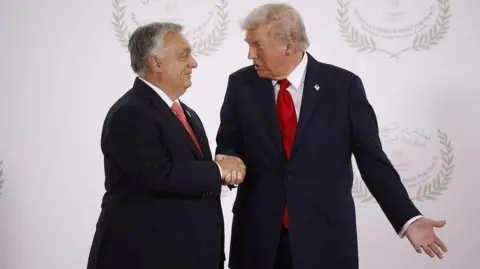
Last week, Viktor Orban expressed that there exists a 'war-opposing network' anchored in a balance of power within the U.S. and a spiritual center in the Vatican after his meeting with Pope Leo. However, as he gears up for a meeting with U.S. President Donald Trump, the Hungarian Prime Minister faces significant pressure regarding Hungary's energy dependency on Russian oil.Orban's alliance with Trump, referred to as a 'great leader,' has been tested as the U.S. pushes Hungary and Slovakia to abandon Russian oil amidst ongoing sanctions meant to pressure Russia to cease its aggressive actions in Ukraine. Following Trump's recent sanctions on major Russian oil companies, Orban remarked that the sanctions were too steep from a Hungarian perspective.Hungary has long been reliant on Russian energy, which Orban has wielded to assert his political influence and appeal to voters seeking 'cheap Russian energy.' As elections approach in April, Orban aims to project himself as a stable leader in an unstable world, but recent polls indicate that his popularity may be waning due to the ascendant opposition party led by Peter Magyar.Complications have arisen, including recent drone strikes on the Druzhba pipeline, which supplies oil to Hungary, further straining relations between Hungary and Ukraine. Orban and his government speculate about a potential end to the Ukraine war and had been working behind the scenes on plans for a summit that included Trump and Putin, a plan that was derailed with the announcement of its cancellation.The predicament is exacerbated by the renewed U.S. sanctions following Orban's public statements around Hungary's energy independence. He faces challenges explaining to his constituents a shift away from reliance on Russian oil when such energy sources have been pivotal to his political narrative. European comparisons highlight that the Czech Republic, once similarly dependent on Russian oil, has transitioned away from this reliance after significant governmental changes and investment in alternative pipelines.Upon meeting with Trump, Orban is expected to face direct inquiries on Hungary's energy policy and the urgency to pivot away from Russian crude. Orban's longstanding argument for remaining tied to Russian energy markets may come under scrutiny, questioning if such a dependency is genuinely necessary.The outcome of this upcoming meeting could significantly impact Hungary's energy future and Orban's upcoming electoral prospects, as the Hungarian Prime Minister is about to discover just how persuasive Trump can be.



