In brief
As the illicit alcohol trade flourishes in Somalia, smugglers like Guled Diriye risk their lives, navigating violent checkpoints and desolate roads to support their families. Despite the dangers of militia attacks and harsh penalties under Islamic law, the struggle against poverty drives many into this perilous business.
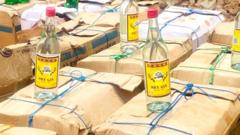
In Somalia’s capital, Mogadishu, an unexpected trade has emerged amidst the chaos: alcohol smuggling. Guled Diriye, a 29-year-old smuggler, has turned to this dangerous venture after losing his job as a minibus driver, his options limited by an economy battered by conflict. Diriye’s sandals are coated in orange dust, remnants of his latest trek from the Ethiopian border, where the illicit liquor is sourced. Despite the risks, smuggling alcohol has become a lucrative means to support his family in a country where consumption of alcohol is illegal under Sharia law. A growing demand, particularly among youth, has fueled this underground trade. Diriye recounted his grim experience of loss, remembering a fellow smuggler who was shot dead during one of their perilous journeys.Streets, once brimming with life, are now overshadowed by armed groups, including al-Shabab, which enforces strict penalties against alcohol consumption. Diriye proudly admits that alcohol smuggling is his lifeline, allowing him to earn in a dire economic landscape. “In this country, everyone is struggling… it's the only way I can support my family,” he says.His journey begins in opportune border towns, where alcohol flows freely from Ethiopia to Somalia. Tribal elders and local leaders have raised alarms about the violence associated with alcohol, citing increasing shootings and confrontations. “Alcohol causes so many evils... our town will always be in the midst of danger,” laments Sheikh Abdalla Mohamed Ali, a local tribal council leader.As Diriye drives, he is acutely aware of the multiple checkpoints manned by clan militias. “If we get blocked, the worst outcome is that we’re held for ransom or worse. So we have to be smart about our routes and our crew,” he explains. The fear of death looms large, yet family obligation fuels his recklessness. With no margin for error, each trip can be fraught with danger—landmines and rogue gunmen add to the peril.Despite harrowing experiences, including a traumatic encounter where he lost a co-worker, Diriye continues the grim task of transporting alcohol. “I recognize that what I do is illegal, but it’s a grim reality,” he conveys solemnly. Colleagues, such as 41-year-old Dahir Barre, agree the poor living conditions and lack of opportunities drive them into this risky business.For Barre, who once worked as a hotel security guard, smuggling offered financial independence amidst overwhelming risks. “Back then, it was even more dangerous. Al-Shabab had more control, but now I make $350 per trip. It’s still a risk, but it’s worth it,” he states wryly.The trek to Mogadishu usually spans several days, fraught with unpredictable dangers. Each successful drop-off brings a semblance of relief, but the understanding that their cargo may transition through various hands before reaching dealers creates a permanent sense of unease.Ultimately, the struggle remains deeply personal for these smugglers, balancing fear with the necessity of survival. The loss of friends and life-altering decisions weigh heavily on Diriye. Yet, in a world fraught with violence, he maintains that the chance to make a living outweighs the inherent risks of this dangerous trade—a sobering testament to the lengths to which individuals will go when faced with profound economic hardship.