In brief
The Democratic Party, buoyed by unexpected wins in recent elections, finds itself at a pivotal juncture. With varying success strategies from candidates across different states, the party is now reassessing its message amid mixed public sentiment and the necessity to reclaim their brand ahead of upcoming elections. Discussions emphasize addressing economic issues consistently rather than succumbing to cultural debates, raising questions about the party's identity and future direction as they prepare for the crucial 2026 midterms.
A year after the Democrats found themselves out of power and without a leader, the party is standing at a crossroads.
After months of downbeat introspection, three election races this week gave them a much-needed burst of momentum.
In New York, there was the unlikely victory of a 34-year-old democratic socialist as mayor of the nation's biggest city, while it was a former CIA agent who won in Virginia to become the state's first female governor.
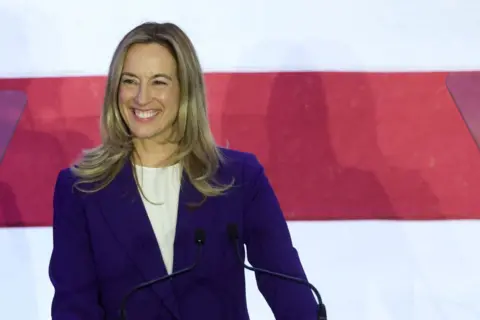
And in New Jersey, a former Navy helicopter pilot who made opposing Donald Trump a focal point of her campaign delivered a decisive victory over a Republican candidate backed by the president.
These three candidates - New York state assemblyman Zohran Mamdani, Virginia's law-and-order moderate Abigail Spanberger and New Jersey congresswoman Mikie Sherrill - each ran a different race.
Their victories have spurred a debate on how Democrats chart a path forward, and whether the centrists or the party's left wing will prevail as they head into the critical 2026 midterm elections - and beyond.
But without a standard-bearer until the presidential race and the 2028 election, Democrats are grappling with how to land on a clear message, rebuild their brand and retool their strategy to win back voters.
Some believe that will happen through refining their focus on the affordability crisis while others believe it's a matter of pushing back harder against Trump. This was a repudiation of President Trump and the Republicans, not an affirmation of us, former US ambassador to Japan and Chicago mayor Rahm Emmanuel told the BBC.
The Democrats have been adrift. The party not only lost the White House last year but also both chambers of Congress, every battleground state and even some support among key demographics including working class, racial minorities and young voters.
Following Tuesday's Democratic sweep, Republicans - and even Trump - appeared to acknowledge they're behind on the battle over economic messaging. Trump summoned Republican senators to the White House early Wednesday morning to discuss ending the stalemate over the government shutdown, now the longest in US history.
Left-wing Democratic congressman Ro Khanna, who campaigned alongside candidates in New Jersey, Virginia and New York, said that means moving beyond the generic conversation on affordability and championing a bold economic message on a national level with specifics on tackling inequality.
The party's money and energy, he noted, has been focused on the left and Republicans will be hoping the nominee fighting a general election comes from that wing. He urged his party to respond by making affordability their message, and by courting the voters Trump was able to reach, even without him on the ballot.