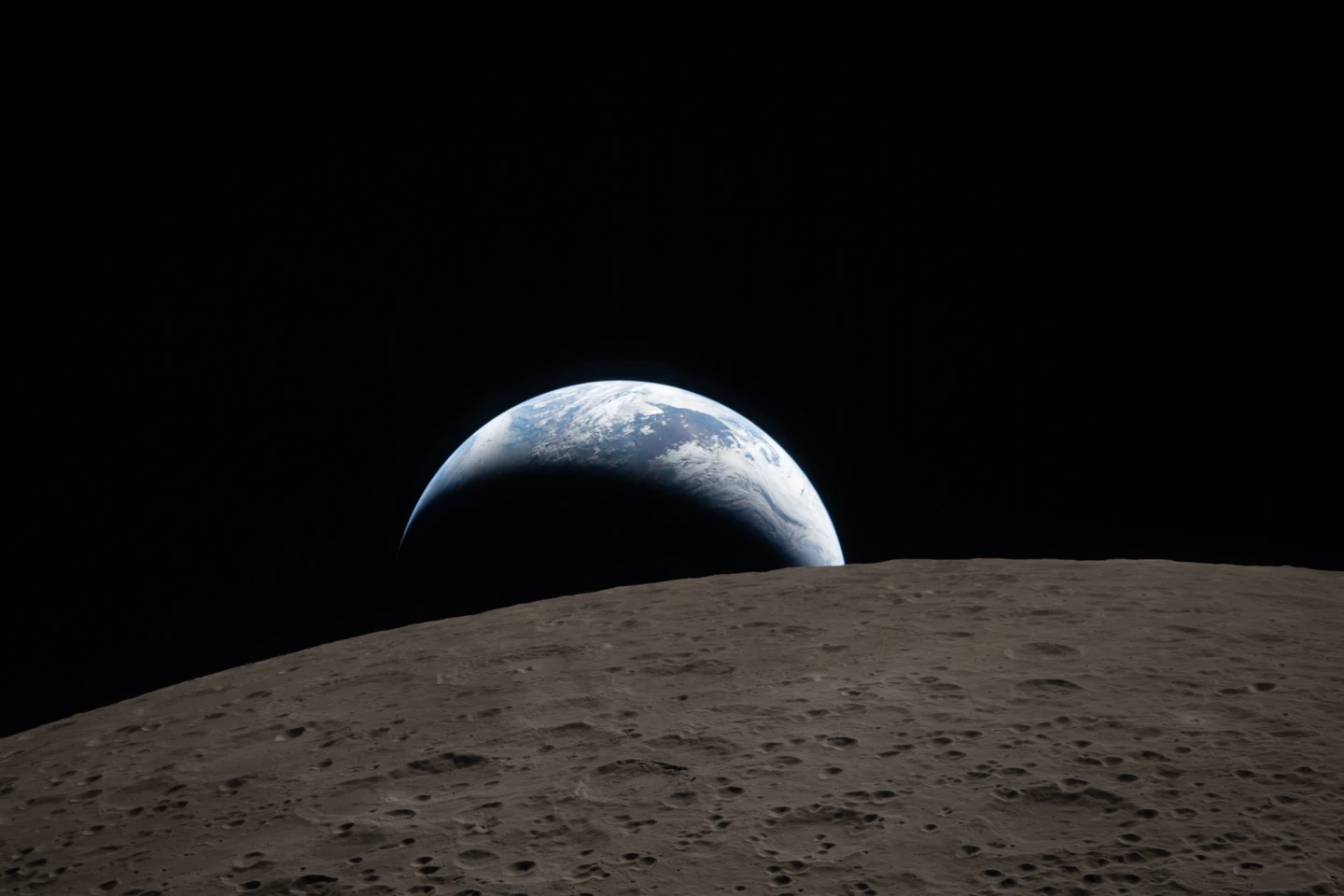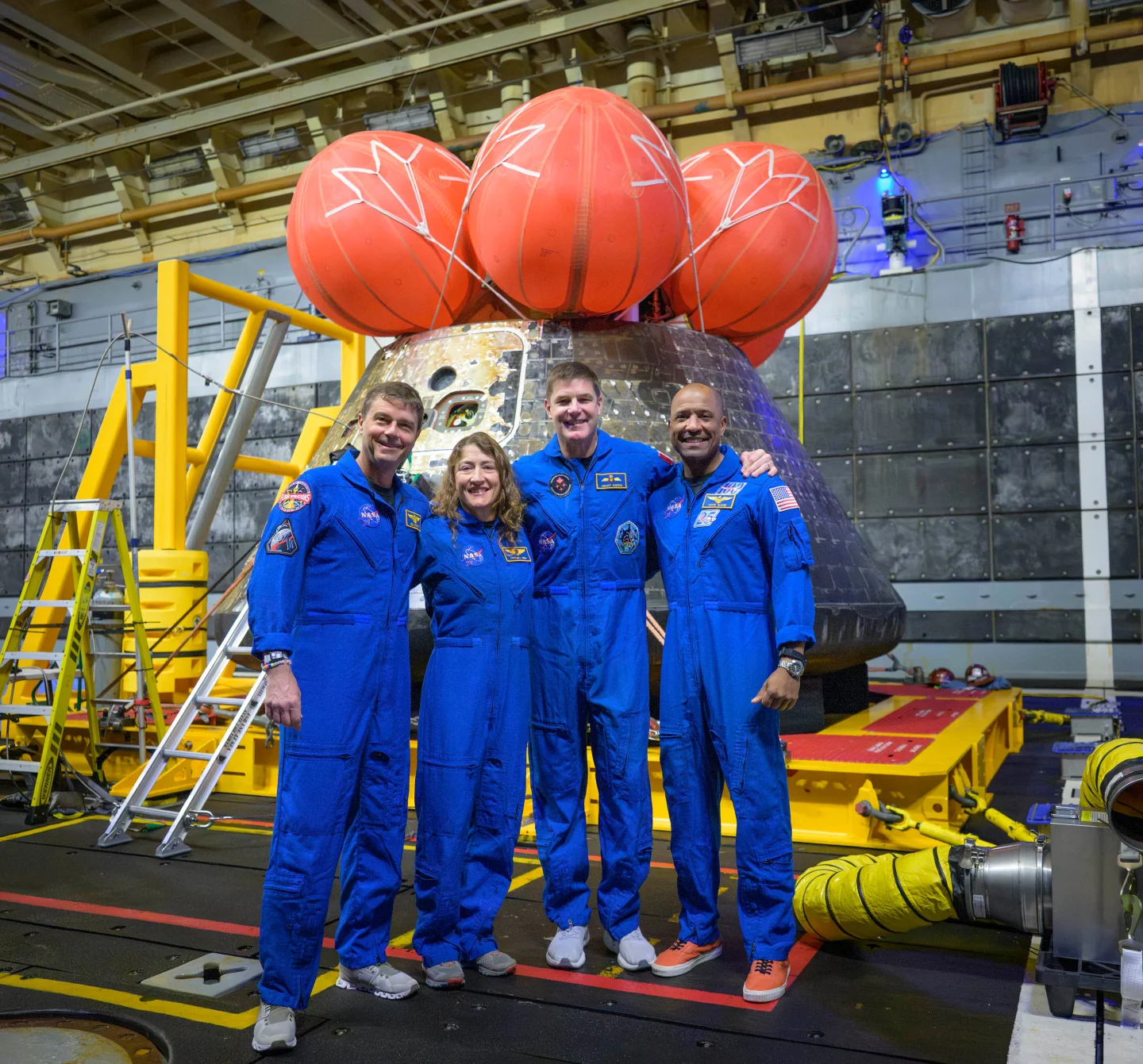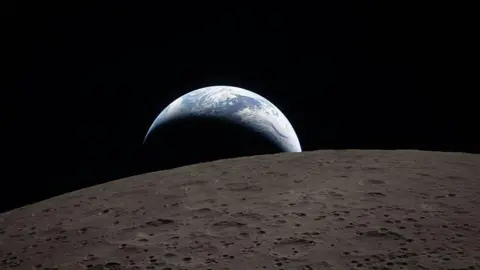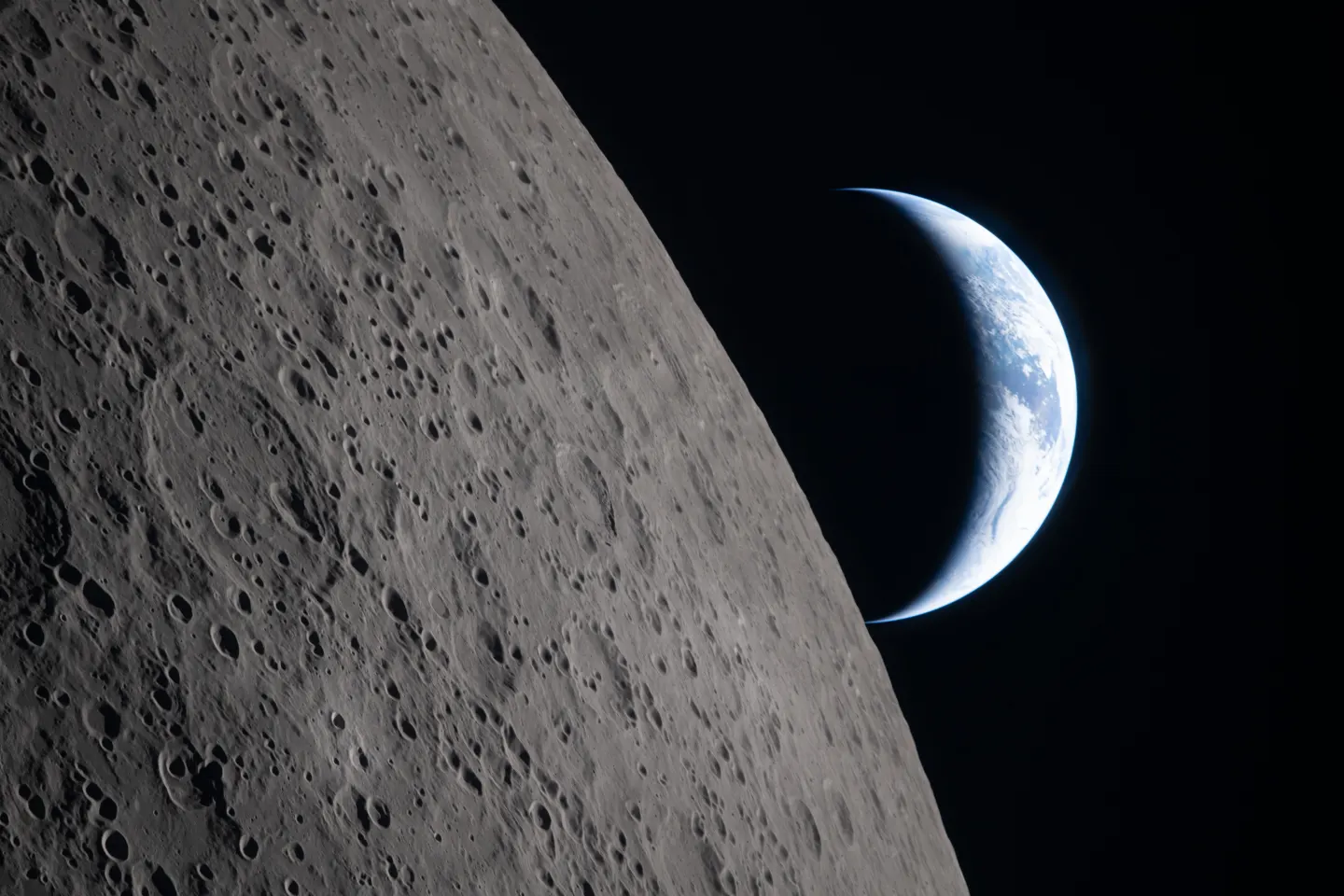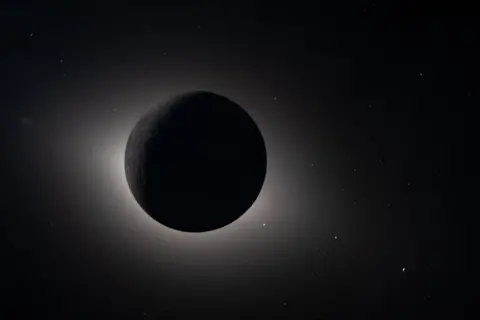
NASA has released the first photographs taken by the Artemis II astronauts during their fly-by of the Moon. The initial image shows an 'Earthset' as the astronauts glimpsed our home planet peeking beyond a cratered lunar landscape, while the second captures the spectacular solar eclipse that occurred when the Moon blocked out the Sun.
Although NASA did not specify which astronaut took the photographs, the views are reminiscent of the famous Earthrise image captured by Bill Anders during Apollo 8’s historic mission in 1968. This iconic image significantly marked the beginnings of the environmental movement, illustrating the fragility of our planet against the vastness of space.
During their six-hour flyby, astronauts experienced a period of radio silence while their capsule traveled behind the Moon. NASA noted that the Earthrise photograph was taken through the Orion spacecraft window at 18:41 Eastern Daylight Time on Monday. The dark part of Earth was in nighttime, while the day side showed swirling clouds over Australia and Oceania.
In the foreground of the image, Ohm crater's rugged edges and flat floor, interrupted by central peaks, reveal details of the lunar surface.
The solar eclipse witnessed by the astronauts was described by Victor Glover as a 'sci-fi' experience. He noted that the corona of the Sun remained visible, creating a stunning halo effect around the Moon, with the bright Earth prominently in view.
NASA’s release of these images serves as a poignant reminder of the beauty of our planet and the ongoing hope for responsible exploration and protection of our environment.
Although NASA did not specify which astronaut took the photographs, the views are reminiscent of the famous Earthrise image captured by Bill Anders during Apollo 8’s historic mission in 1968. This iconic image significantly marked the beginnings of the environmental movement, illustrating the fragility of our planet against the vastness of space.
During their six-hour flyby, astronauts experienced a period of radio silence while their capsule traveled behind the Moon. NASA noted that the Earthrise photograph was taken through the Orion spacecraft window at 18:41 Eastern Daylight Time on Monday. The dark part of Earth was in nighttime, while the day side showed swirling clouds over Australia and Oceania.
In the foreground of the image, Ohm crater's rugged edges and flat floor, interrupted by central peaks, reveal details of the lunar surface.
The solar eclipse witnessed by the astronauts was described by Victor Glover as a 'sci-fi' experience. He noted that the corona of the Sun remained visible, creating a stunning halo effect around the Moon, with the bright Earth prominently in view.
NASA’s release of these images serves as a poignant reminder of the beauty of our planet and the ongoing hope for responsible exploration and protection of our environment.