In brief
Kamala Harris has pivoted her campaign messaging from optimism to caution as she highlights former President Trump's authoritarian tendencies, citing critical remarks from John Kelly, his ex-Chief of Staff. As the political landscape tightens before the 2024 presidential election, Harris aims to unite disaffected Republicans and independents against Trump's resurrected candidacy.
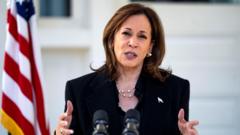
Kamala Harris, the Vice President of the United States, has recently adjusted her campaign strategy as the 2024 presidential election approaches, shifting from a hopeful narrative to a more cautionary message regarding former President Donald Trump. Standing outside the vice-presidential residence in Washington D.C., Harris launched a vehement critique of Trump, referring to him as “increasingly unhinged and unstable.” Her remarks are notably influenced by comments from John Kelly, Trump’s former White House Chief of Staff, who described Trump’s behavior as consistent with authoritarianism.Harris highlighted Kelly’s assertion that Trump embodies traits typical of fascism and has expressed admiration for Hitler. She warned that Trump seeks “unchecked power” and intends to use the military as a “personal militia” for his political pursuits, prompting a swift rebuttal from the Trump campaign, which labeled Harris's statements as desperate lies.As political tensions heat up, candidates often resort to negative campaigning to galvanize their base and disrupt opponents. Harris's recent pivot represents a stark change from the more joyful approach she adopted earlier in her campaign. Political strategist Matt Bennett explained that this tactical shift is a calculated effort to ensure voters are aware of Kelly’s alarming portrayal of Trump.Harris's latest remarks also underscore her campaign's strategy to attract independent voters and moderate Republicans who are reluctant to support Trump's return to the White House. Polls suggest that suburban voters in key battleground states might be open to alternative candidates, particularly those who have grown concerned about Trump’s candidacy.Among those sympathetic to Harris's warnings is Devynn DeVelasco, a young independent voter. However, she expresses concern over the potential fatigue surrounding repeated critiques of Trump. GOP strategist Denise Grace Gitsham believes that voters who prioritize Trump’s policy over personality are unlikely to change their minds regardless of new allegations surrounding Trump.As both candidates ramp up their attacks, Harris’s campaign is focusing on rallying efforts in states pivotal to her electoral success, emphasizing the implications of a Trump presidency on critical issues such as reproductive rights and healthcare. Conversely, Trump continues his traditional campaign strategy, attacking Harris's competency and dismissing her message as identity politics.As the campaign unfolds, Harris's strategy targeting anti-Trump Republicans and independents poses inherent risks; investing in certain aspects of the campaign could lead to lost opportunities elsewhere. With entrenched opinions surrounding Trump, the effectiveness of Harris's rhetoric will be tested come election day. Should her focus on anti-Trump sentiment prove victorious, her strategic changes could prove advantageous. Otherwise, critics may quickly emerge to dissect her choices.