
In brief
Eight orangutans—three mothers, their daughters and two adult males—were safely released into a protected reserve in western Borneo after a summer of destructive fires that engulfed their habitat. The rescue, carried out by the International Animal Rescue Indonesia (Yiari) and the forestry ministry, followed the evacuation of 46 other apes during August‑September burning. The fires, intensified by the strongest El Niño on record, have already transmitted large swathes of the island’s rainforests into dangerous conditions for wildlife. Conservationists warn that continued climate change could turn the remaining orangutan habitats into inhospitable wastelands. The release into a connected forest reserve ensures the apes have access to food, water and safe corridors to travel back into the wild.
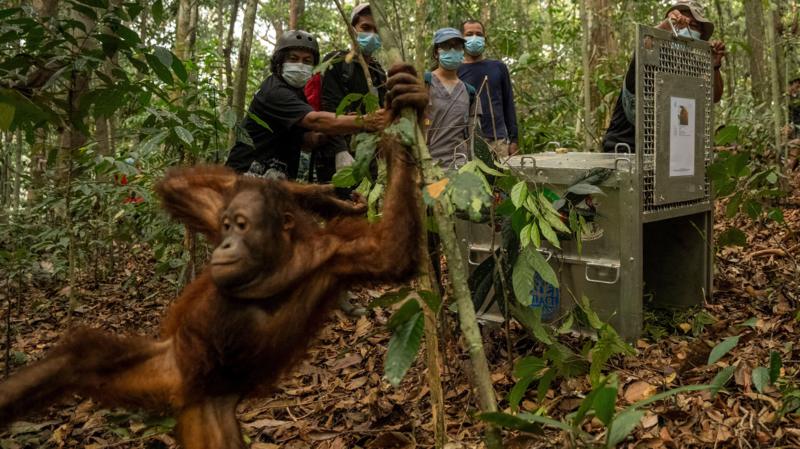
Eight orangutans were released back into the wild in Borneo after being taken into a rescue centre when their forest habitat was threatened by summer wildfires.
Three mother apes, their three daughters and two adult males were freed in a reserve in the west of the island on Friday, according to the International Animal Rescue Indonesia (Yiari) and the forestry ministry.
Indonesian authorities rescued 46 orangutans from fires in August and September. Wildfires in the region are common in the dry season but were more intense this year because of the El Niño ocean‑warming phenomenon, which makes weather patterns more volatile and severe.
The apes are critically endangered. Around 104,000 orangutans remain in Borneo and Sumatra—down from more than 230,000 a century ago, according to WWF.
The fire‑eroded habitat and the spread of oil‑palm plantations made food scarce and brought the orangutans closer to human settlements, prompting their evacuation in early September.
The reserve chosen for the release has ample food and water supplies and is connected to other forested areas, giving the apes a realistic chance of survival and natural dispersal.
Yiari’s executive director Karmele Llano Sanchez explained that relocating the animals was a necessary step when their homes became unsafe, and highlighted the organisation’s commitment to giving rescued wildlife a true opportunity to thrive in their native environment.


