
In brief
The US announcement to reassess its multi-billion dollar submarine pact with Australia and the UK under the Aukus agreement reflects a response to evolving defense priorities. This review, led by a critic of the agreement, has sparked concerns over military spending and strategic alignment with allies amid rising tensions with China.
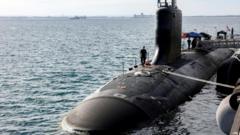
The United States has initiated a review of its high-stakes submarine deal with Australia and the UK under the Aukus pact, emphasizing the need for alignment with its "America First" policy. This strategic reassessment comes as the trilateral alliance aims to counter China's growing influence in the Indo-Pacific region. Under this multi-billion dollar agreement, Australia is to acquire its first fleet of nuclear-powered submarines from the US and collaborate on advanced technology to create a new class of vessels.Both the Australian and UK governments have downplayed the significance of the US review, which is customary for new administrations assessing previous commitments. Despite facing pressure from the US to increase military spending—targeting a 3% GDP allocation—Canberra has resisted reaching the ambitious levels demanded, unlike the UK, which is set to boost its defense budget to 2.5% by 2028. The Aukus deal, valued at £176 billion ($239 billion; A$368 billion) and signed in 2021, represents a cornerstone of military cooperation among the three nations, each of which had different leadership at that time. A US defense official highlighted that evaluating the pact is essential to ensure its relevance under the current administration's defense strategy.Elbridge Colby, an outspoken critic of the Aukus arrangement, will lead the review. Meanwhile, Australia's Defense Minister Richard Marles expressed confidence in the continued viability of the agreement, reinforcing the necessity of enhanced submarine capabilities for the nation. Advocates for Australian self-reliance in defense have emerged, but Marles has emphasized the importance of adhering to established plans, referencing past missteps with a canceled submarine contract with France.While maintaining that the review is commonplace, Australian officials affirmed their commitment to collaborating closely with the US. A similar reassessment was conducted by the UK last year. Aukus is viewed as a landmark partnership that plays a crucial role in maintaining security in the region, despite facing criticism from China, which has denounced the alliance as a catalyst for militarization.Concerns were raised by defense analysts regarding the US's capacity to fulfill its own demands for nuclear submarines while balancing commitments to allies. Key considerations include how Australia will utilize the submarines in alignment with US strategic goals, particularly in the event of tensions over Taiwan. The review could lead to a pivot towards emphasizing long-range weapons technology rather than solely submarines.If doubts regarding the agreement were to escalate, China would likely regard it as a victory, as they have long condemned the Aukus deal. For Australia, acquiring nuclear propulsion technology marks a significant advance in military readiness, positioning the nation only after the UK in gaining access to such capabilities. The subsequent phase, commencing in 2027, will enable the US and UK to station nuclear submarines in Perth, while Australia aims to procure a total of five Virginia-class submarines, with further collaboration envisioned for developing a distinct class of submarines.In conclusion, the Aukus agreement represents a pivotal enhancement of Australia’s military capabilities and a strong stance of collaboration with the US and UK, even as the review highlights the complexities inherent in modern defense relationships amidst geopolitical tensions.

