
In brief
Amid the looming threat of Russian advances, Anton Yaremchuk, a Ukrainian cinematographer and co-founder of the aid organization Base UA, continues his tireless work to evacuate civilians from Pokrovsk. With dangers escalating, he and his team have succeeded in transporting around 3,000 people to safety, but many are still reluctant to leave their homes. As winter and warfare intertwine, the fate of the remaining residents hangs precariously in the balance.
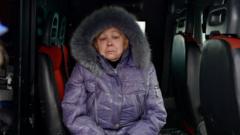
As he gears up for another harrowing mission into the war-torn city of Pokrovsk, 35-year-old Anton Yaremchuk takes solace in the cover of fog, which conceals him from Russian drones. His armoured van, while a modest shield, cannot guarantee safety; every outing could be fraught with peril. Back in December, his vehicle was struck by shrapnel from a drone strike, injuring members of his team, though they narrowly escaped with their lives.“Right now, we are seeing hell,” Anton laments as he navigates the increasingly dangerous landscape. With Russian forces encroaching—now just 2 kilometers away—Anton knows the urgency is palpable. Approximately 7,000 residents remain in Pokrovsk, and his goal is to rescue as many as he can from this nightmare.Since Moscow began its full-scale invasion in February 2022, Anton abandoned his life as a cinematographer in Berlin to return home and co-found Base UA, an aid organization focused on civilian evacuations. To date, they have successfully relocated around 3,000 people from the front lines.Once a refuge in the region boasting the largest hospital and active train support, Pokrovsk is now under siege. The looming capture by Russian forces is concerning for Ukraine’s military logistics and will cut off essential supplies. An essential coal mine in the area that fuels the steel industry halted operations last month due to the offensive.As Anton approaches Pokrovsk, he dons protective gear complete with a tourniquet and a medical kit. His visible jacket displays the slogan: "leave no-one behind." A voice of caution rings out as they prepare to leave their vehicle: "When we park, please disembark promptly and stay away from the vehicles—targets could be drawn."The further they travel into the city, the louder the explosions, making the once bustling streets elusively desolate. Homes are boarded up, buildings lie in ruins, and the silence where chimneys once exhaled smoke is eerily stark. Flags of surrender signal desperate pleas for safety, and among the most vulnerable, Anton finds Olga, a 71-year-old woman fortified by years of resilience, waiting by the roadside.“I’ve lived in this house for 65 years,” she remarks with a tremor in her voice, “but it is not life anymore; it feels like hell.” With her family already evacuated, her heart weighs heavy as she locks the door one last time, but the sound of distant explosions makes it clear—there is no returning.Despite Anton's persistent pleadings to those still hesitant to leave, fear and nostalgia block many from taking the necessary step toward safety. One elderly woman explains her decision to stay, believing she should remain close to her deceased son’s grave. Anton counters compassionately, “Wouldn’t he wish for your safety?”With each home visited, Anton faces the cold reality of pressing urgency—street battles lie ahead. “We are in the final stage,” he warns, while offering pamphlets that detail free evacuation and aid available in safer areas.As they collect falls of bottled water along their route, Anton is swift in his mission, constantly vulnerable to the threats around them. Despite his hard work, fatigue seeps in as another expected evacuation fails—one more family member unaccounted for, another soul lost in the chaos.While the future remains uncertain, with the prospect of negotiations looming, anticipation hangs heavy. Anton feels demoralized by the relentless cycle of violence and loss experienced by innocent lives. “I’ve learned not to look too far ahead,” he admits.The last evacuation of the day features 75-year-old Lyuba, who grasps her belongings as her life is carefully condensed into plastic bags. Her expression manifests the harrowing dread that no escape offers certainty, even as Anton’s van fills with the sound of fear and resignation.As winter takes hold and war persists, Anton and his team continue navigating the shifting frontlines, rescuing who they can as they reflect on the tragedies unfolding around them. “Every time I see this, I break down. It’s just human tragedy,” he expresses somberly.Faced with the growing perils of their missions, evacuation efforts for Anton's team from Pokrovsk have been suspended temporarily after a terrifying drone strike. As the cold grip of winter tightens, the remaining civilian population—many elderly and vulnerable—find themselves increasingly exposed to the relentless danger surrounding them, as they await potential salvation, or the inevitable fall of Pokrovsk.



