In brief
The illegal gold mining phenomenon known as "galamsey" in Ghana is causing severe environmental harm, polluting rivers and degrading land. Artists and activists have taken a stand against this crisis, amplifying community voices and urging the government for impactful action.
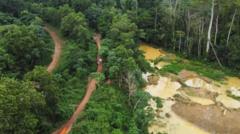
In Ghana, illegal gold mining, often referred to as "galamsey", has emerged as an alarming threat not only to the environment but also to public health and community livelihoods. Recent reports illustrate a dire situation where the Pra River, one of Ghana’s key water bodies, has become so polluted that local artists like Enil Art have resorted to using the muddy, discolored water as paint to highlight the ecological destruction occurring in their homeland.Mercury, a toxic substance commonly employed in gold extraction, is leading to deleterious consequences, contaminating waterways and posing long-term health risks. As WaterAid describes it, this situation is nothing short of "ecocide". Enil Art and his partner Jay Sterling recently visited the region to document the changes, recalling that the pristine waters, once teeming with life, have now turned a troubling yellowish-brown due to mining activities.In response to the environmental crisis, citizens are mobilizing through protests demanding government accountability to halt illegal mining operations. Social media hashtags like #stopgalamseynow and #freethecitizens have garnered attention, especially amongst the youth in Ghana and diaspora communities in countries such as Canada and the UK.Musicians have joined the cause as well. Notable Ghanaian artists, like Black Sherif and Stonebowy, used their platforms during concerts to draw attention to the devastation caused by galamsey, highlighting the cultural and environmental importance of Ghana's natural resources.The shift in illegal mining practices has escalated into a large-scale operation driven by foreign interests, where machinery replaces traditional hand tools. This change threatens not just local ecosystems but also agricultural viability, as many farms have been sacrificed for gold extraction. Reports indicate that around 4,726 hectares of land have been devastated, resulting in societal discord and devastation in regions dependent on cocoa farming.Experts warn that the rampant use of chemicals in mining—particularly mercury—poses significant public health risks, with potential contamination extending up to 1,000 years. Local community members report dwindling water sources for drinking and irrigation, and farmers lament the increased costs of water sourcing as their natural supply degrades. "We are slowly poisoning ourselves," cautioned Dr. George Manful, stressing the urgency of the crisis.The Ghanaian government, under President Nana Akufo-Addo, has faced criticism for its slow response to the crisis, though recent mobilizations, including the deployment of naval forces to halt illegal mining near water bodies, signify a potential change. Yet, conflicting interests abound as some political affiliates have ties to illegal mining operations, complicating concrete actions against the perpetrators. With the global demand and heightened prices for gold driving more activity in this sector, the struggle for resource management in Ghana has never been more critical. As communities continue to rally against the impacts of illegal mining, they seek to reclaim their environment and safeguard their future against the looming specter of ecological collapse. The path forward remains fraught with challenges, but the voices of Ghana's citizens grow louder, demanding change and restitution for the harm done to their land and lives.