
In brief
Over 99 rescue workers have died in the aftermath of relentless bombings in Gaza, grappling with immense trauma as they search for the deceased under rubble. Despite their heroic efforts, mental health resources are scarce and the path to recovery seems daunting, emphasizing the urgent need for support and equipment as they confront a haunting reality.
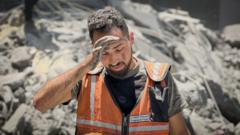
In Gaza City, Abdullah al-Majdalawi, a dedicated rescue worker, reflects on the profound impact the last 15 months of conflict have had on his psyche. "I have become afraid of my own memories," he confides, speaking not only for himself but for countless colleagues who have endured unimaginable hardship.During the ongoing Israeli bombardments, the Gaza Civil Defence, the primary emergency service, has played a pivotal role. With thousands of funerals taking place, mourners often lay the bright orange vests of fallen rescue workers over their bodies. These vests, marred by dirt and the stains of past battles, symbolize the ultimate sacrifice made in a quest to save lives.The toll of this harrowing mission has been staggering. The Civil Defence reports that since the onset of fighting, 99 of their own have lost their lives, with 319 sustaining grievous injuries. "We put the vest there to honor our colleague who sacrificed his soul while saving others," explains Nooh al-Shaghnobi, another rescue worker who has taken to social media to share his experiences.As the conflict has continued, the devastation has affected more than just physical structures; it has devastated families across Gaza. Official statistics indicate that more than 47,000 Palestinians lost their lives, a figure largely comprising women and children, alongside those wounded, exceeding 111,000. These numbers may well be an underrepresentation, as studies reveal a grim reality—many lives lost beneath the rubble remain unaccounted for.The fragile ceasefire that was recently established signals a potential shift for the Civil Defence. Yet, their daunting task looms ahead, with estimates suggesting that over 10,000 individuals may still be trapped beneath the debris. To manage the overwhelming challenge, Civil Defence workers have resorted to seeking assistance from locals to identify victims buried in the wreckage.Tragic accounts from within the rubble detail the harrowing experiences these workers face. Al-Shaghnobi vividly recalls a rescue wherein they discovered three lifeless bodies, revealing just how precarious their situation truly is. "I feel more pain, not less," he admits, expressing the deep emotional scars heard in his voice. “Who outside of Gaza can envision this?”While support has been extended to returning Israeli hostages, the psychological anguish endured by those in Gaza lacks adequate recognition. Reports indicate that none of the rescue workers interviewed had access to counseling services, leaving them isolated with their grief. Mohammed Lafi, another Civil Defence worker, articulates his longing for mental health support: "We all need this... but no one talks about it."The challenges extend further, with the Civil Defence facing equipment shortages—some workers joke that they may need a second rescue team just to help their own. "We have so little equipment; we need another Civil Defence to rescue the Civil Defence," laments al-Majdalawi, revealing how dire the situation has become amidst ongoing destruction.Despite these hardships, hope remains. Even with limited resources, the Civil Defence aims to recover as many bodies as possible within the coming months. The agency faces immense challenges, including accessing victims buried under an estimated 37 million tonnes of rubble, coupled with the threat posed by unexploded ordnance littered throughout the area.Families, meanwhile, remain in agonizing limbo, searching in vain for their loved ones. Ali Ashour continually seeks evidence of his 18-year-old son, holding on to hope against all odds, while others recount their own stories of loss. "I feel as though I am living in a cemetery," one mother shared, surrounded by the relics of tragedy and grief.The workers of the Gaza Civil Defence continue their relentless fight, driven by a commitment to recover the dead and honor their memories. "These people need to be found and recognized," concludes Al-Shaghnobi as he recognizes the urgent mission that lies ahead for the brave souls navigating the ruins of Gaza. With the right support and resources, they hope to fulfill this promise in amidst a landscape marred by despair.
